






Thrifting can be a great way of finding affordable, good-quality clothing, but there are some key features to look for when choosing what to purchase from a thrift store. There are many reasons to purchase your clothing secondhand, apart from just cost: a more sustainable planet is just one of them, as the clothes do not end up in landfill plus you can find things that may be more your personality than what’s in the current fashion stores.
If you’ve ever walked into a thrift store and felt overwhelmed by the sheer volume of clothes—or frustrated by what almost works—you’re not alone. But second-hand shopping doesn’t have to be chaotic or disappointing. In fact, when approached with clarity and a trained eye, it can be an empowering way to align your wardrobe with your values: sustainability, individuality, and substance over trend.
So, how do you separate the gems from the junk?

Let’s walk through what to look for—and what to walk away from—so you can build a beautiful, functional wardrobe without wasting time, money, or energy.
Quality Indicators: What Makes a Garment Worth Taking Home
-
Fabric First
-
Look for natural fibres like wool, silk, cotton, and linen. They tend to last longer, breathe better, and hang more elegantly on the body. Plus, they are less likely to hold onto that musty old smell after laundering than synthetics.
-
Run your fingers along the fabric. Does it feel smooth, substantial, or pill-prone and flimsy?
-
Check for excessive pilling, thinning, wear or stretching—especially at high-friction areas like underarms and elbows, collars and cuffs.
-
-
Stitching & Seams
-
Turn the garment inside out. Are the seams straight and neatly finished? Or are threads hanging loose?
-
French seams or serged edges are signs of quality construction.
-
Tug lightly on seams—if they gape or distort, it’s likely a short-lived piece.
-
-
Lining Matters
-
Fully lined garments, especially in jackets and skirts, often indicate better quality.
-
Check that the lining is intact, smooth, and not pulling or bunching.
-
-
Zippers, Buttons, and Closures
-
A metal zipper is usually more durable than plastic.
-
Ensure all buttons are present—and ideally, that a spare is included.
-
Test closures: Do they fasten securely, or feel flimsy and loose?
-
Alteration Wisdom: What’s Easy to Fix vs. What’s Not
Here’s a stylist’s cheat sheet on what’s worth tailoring—and what’s best left behind:
EASY(ish) TO ALTER
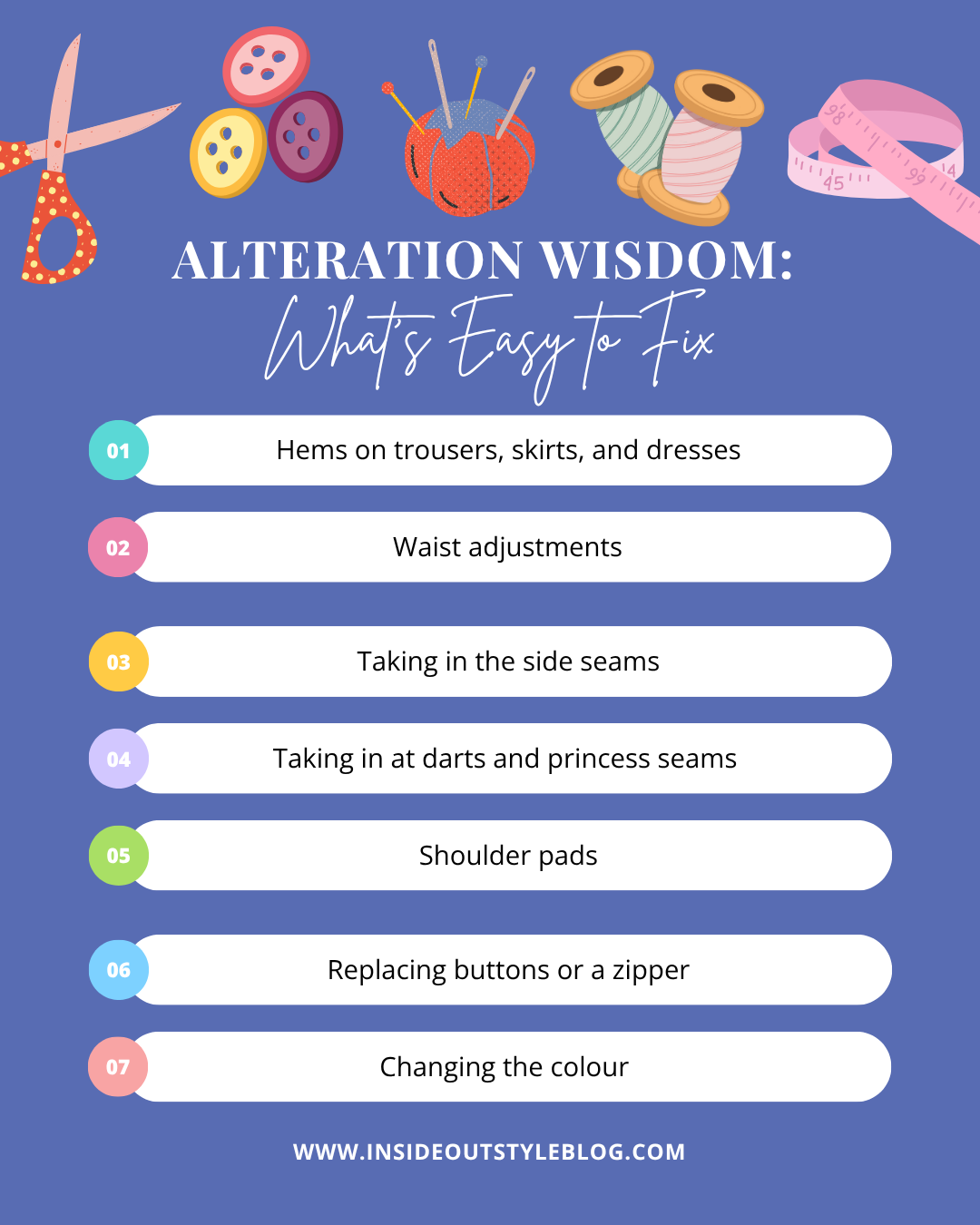
- Hems on trousers, skirts, and dresses (especially if there’s a generous seam allowance)
- Taking in the side seams for a better fit at the bust or waist
- Taking in at darts and princess seams for a better fit through the torso
- Shoulder pads (can often be removed to modernize a silhouette)
- Replacing buttons or a zipper
- Changing the colour – natural fibres are fairly easy to overdye to a new colour (check out our guides here), this is why buying natural fibres rather than synthetics is the way to go, as you may find a great garment, in good condition, that’s a style that speaks to your style recipe but it’s just in the wrong colour. This may be fixable fairly easily.
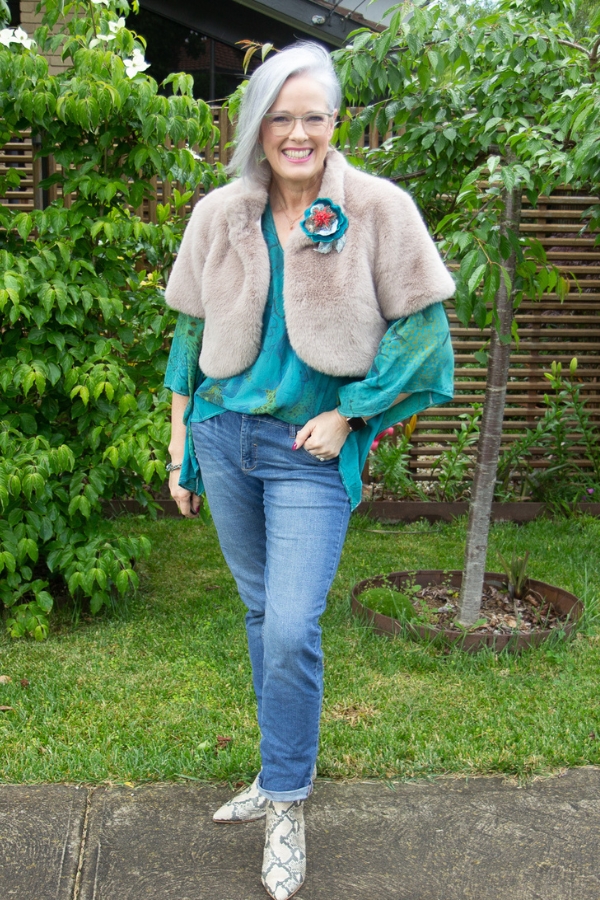
This silk shirt was thrifted and then overdyed because it was warm and I’m cool.
 DIFFICULT (OR COSTLY) TO ALTER
- Shoulder fit on blazers and coats (major surgery!) Look for jackets that fit at the shoulders
- Armholes too deep this will affect how the garment moves on you and if you have slimmer arms the whole garment will look bulky and broad through your chest (plus your waist disappears with deep armholes – see why here)
- Moving dart placement (often affects the entire structure of the garment)
- Shortening sleeves with decorative cuffs or linings
- Heavy beading or embellishments that interfere with seam work
- Significant changes in size or structure (e.g. turning a size 14 into a 6—not worth it unless you’re doing the alteration yourself and have the time and experience)
 Know Your Non-Negotiables
Before you thrift, take a moment to check in with your values and style priorities:
-
Do you prefer clothes that feel soft on the skin? → Prioritise fabric feel.
-
Is tailoring out of the question for your lifestyle? → Stick to near-perfect fits.
-
Are you seeking timeless over trendy? → Skip fast-fashion labels and look for classic silhouettes in quality materials.
This is where logic meets intuition—shopping second-hand doesn’t require a stylist’s certificate, just a system and a little self-trust.
Become Your Own Alterationist
Have you got sewing skills already? Then have a go at doing some alterations. If you need a refresh or want to learn these skills here’s Make Sew and Mend – by Bernadette Banner who teaches you how to do these alterations using traditional techniques.
Refashion Your Finds
I like to thrift items that I’m thinking about refashioning in some way. It’s a low cost way of experimenting with my creativity. If it works great, if it doesn’t I haven’t ruined an expensive item.
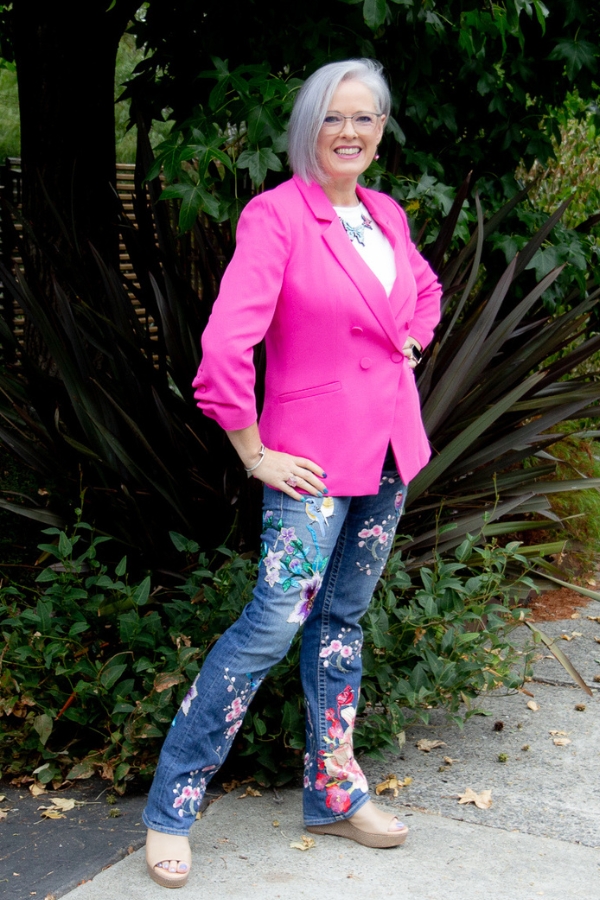
These jeans were a thrift shop find, and then I embellished them and made them completely custom!
Here are some ideas on upcycling denim.
It’s Not Just About the Bargain
Thrifting isn’t about scoring a bargain—it’s about aligning with your values: sustainability, creativity, and self-expression. When you know what to look for, second-hand becomes a treasure hunt, not a guessing game.
Remember: your body isn’t the problem—fashion’s standards are. And when you choose clothes that respect your values and your form, style becomes second nature.