






There has been a quiet but powerful shift happening.
Women are stepping away from rigid beauty rules, harsh dye schedules, and high-maintenance styling routines. In their place, they’re choosing something that feels far more sustainable. Not just for their time, but for their identity.
Embracing natural hair texture and colour is no longer a compromise. It’s becoming a conscious style decision.
And like any meaningful shift in style, it starts in the mind before it shows up in the mirror.

Why This Shift Is Happening Now
For many years, polished hair often meant controlled hair. And it meant no grey hair.
Smooth. Sleek. Styled into submission.
In the past, when dress codes were more strict and more universal, controlled hair meant a tidy and controlled mind and way of living. But in more recent decades, as dress codes have become more relaxed and casual, with more room for personality expression, not only has what we wear changed, but so has the way we do our hair.
And over time, the cost of that control becomes clearer. Regular colouring, heat styling, and structured cuts require ongoing effort, time, and energy. And at a certain point, many women begin to question whether that effort still feels worthwhile.
What I see time and time again is this realisation:
It’s not that you’ve stopped wanting to look good. It’s that your definition of “looking good” has evolved as fashions have changed.
You want ease. You want your hair to support your life, not dominate it.
And perhaps most importantly, you want to recognise yourself again.
The Identity Shift Behind the Decision
Choosing to embrace your natural hair texture is rarely just about hair.
It’s about identity.
It’s about moving from trying to meet an external standard to defining your own version of style.
This is particularly true when it comes to grey hair or changes in texture. These shifts can feel confronting at first, not because they are unattractive, but because they are unfamiliar.
There can be underlying beliefs such as:
- Grey hair makes me look older “Grey is for grannies”
- Natural texture looks less polished – curly hair is untamed and wild
- I need to maintain what I used to look like because women aren’t allowed to age
But when you pause and question these thoughts, something interesting happens. You begin to realise they are not facts. They are inherited ideas.
And once you see them for what they are, you can choose differently.
 Working With Your Hair, Not Against It
One of the most practical benefits of embracing natural hair texture and colour is how much easier everything becomes.
When your cut supports your natural movement, styling becomes simpler and so much faster. When your colour aligns with what naturally grows from your head, maintenance softens dramatically.
Instead of forcing your hair into a shape it resists and springs out of at the slightest hint of humidity or rain, you begin to enhance what it already wants to do.
This might look like allowing waves or curls to form rather than straightening them away, choosing softer, more blended colour transitions instead of harsh regrowth lines, or opting for cuts that move with your texture rather than requiring daily restyling.
It’s not about doing less for the sake of it. It’s about doing what actually works.
What About Looking Polished?
This is often the unspoken concern.
If I stop “managing” my hair, will I still look put together?
The answer lies in understanding what polish really is.
Polish doesn’t come from forcing yourself into a rigid standard. It comes from intention.
A well-cut style that suits your texture will always look more refined than one that requires constant correction. Healthy hair, even if it’s natural, reads as more polished than damaged hair that has been overworked.
And when your hair aligns with your overall style personality, it becomes part of a cohesive whole rather than something you’re constantly trying to fix.
Aligning Hair With Your Personal Style
Your hair is not separate from your style. It is a key part of it.
If your clothing reflects ease, natural fabrics, and relaxed structure, highly styled hair can feel out of sync. On the other hand, if you love a more structured or classic look, your natural texture can still work beautifully when shaped intentionally.
This is where personal style becomes your anchor.
Rather than asking, “What should I do with my hair?” ask, “How does my hair support the way I want to express myself?”
For some, that might mean embracing soft greys and natural waves. For others, it might mean maintaining some colour but softening the contrast and reducing the upkeep.
There is no single right answer. Only what feels aligned for you.
The Freedom You Gain
What I hear most often from women who make this shift is not regret.
It’s relief.
Relief at no longer scheduling life around hair appointments. Relief at not fighting texture every morning. Relief at feeling more like themselves again.
And perhaps unexpectedly, there is often a confidence that follows.
Because when you stop trying to maintain an outdated version of yourself, you create space to fully step into who you are now.
My Own Radical Change
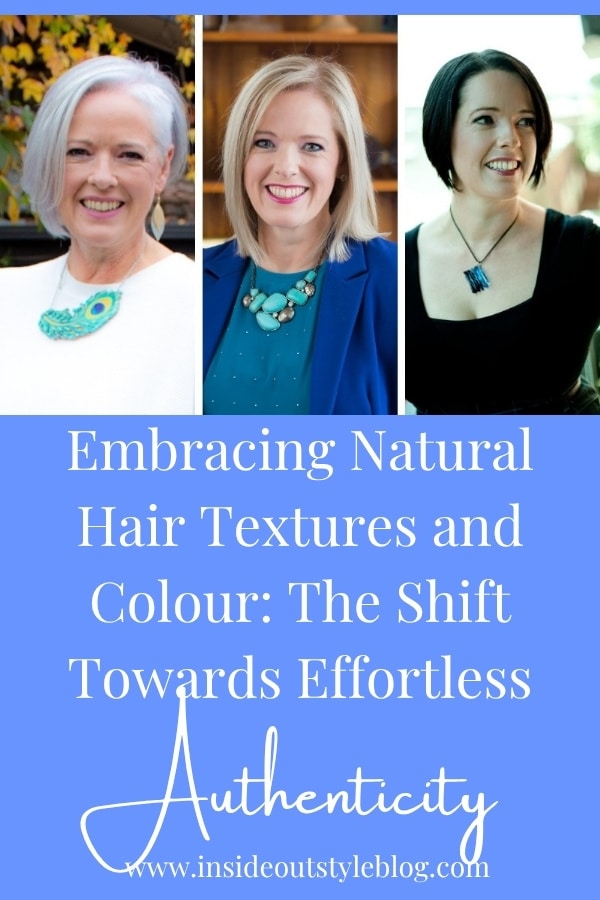
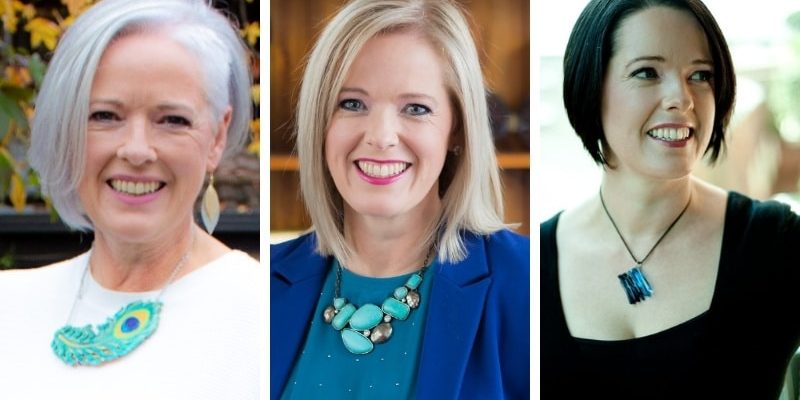
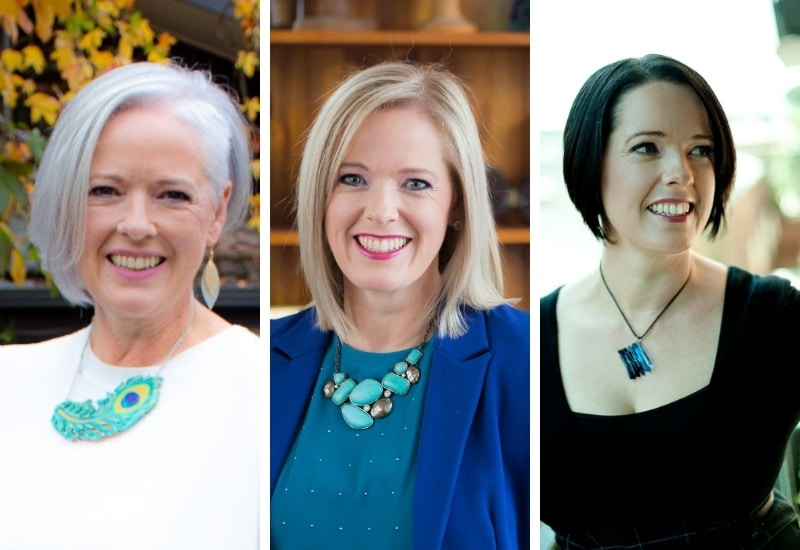 If you’ve spent any time here on Inside Out Style, you’ll find photos of me from 2008 onwards, starting with dark brown hair, becoming blonde in 2014 and then embracing my natural silver in 2021. It’s been a journey, and it takes some time to adjust to each new version of yourself (well, that’s my experience).
Bruneette to blonde was a massive shift, as I’d never wanted to be blonde or identified as a blonde, so such a big change took me over a year to get used to. I was surprised every time I saw myself in a mirror as I’d forget that I no longer (after over 45 years of being dark, was blonde.
Then, when I decided to move from blonde to grey. I did a quick poll on Instagram and asked my followers whether I should or shouldn’t do it. Interestingly, I got quite a split between the Yes and No votes. The No’s were telling me that I’d look older (as women in the West should somehow be looking 20 forever, it seems), while the Yes’s were all about embracing the me now.
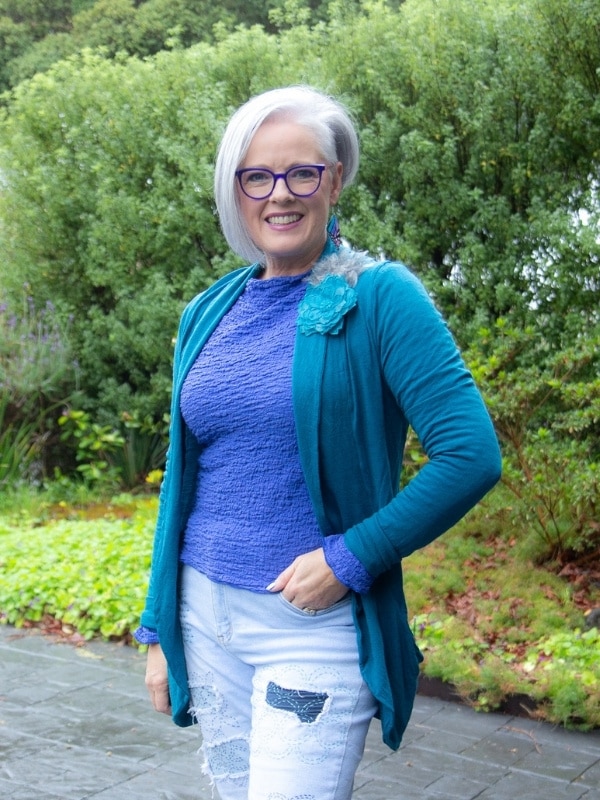
When I made that transition, I decided that I needed a brand new cut, unlike one I’d ever had, to go with the new colour. What’s interesting is that I get asked frequently who dyes my hair (people find it hard to believe it’s what grows out of my scalp), and I get stopped on the street all the time and complimented on my hair, something I never got as a brunette or as a blonde.
Style-wise, I have straightish hair (a little kink here and there), and so some version of a bob is the easiest haircut for me to style and takes the least time. I have fine, but heavy hair that really doesn’t hold volume either, so whenever I’ve tried for hairstyles that require volume, they just don’t work (they stay as a style for approximately 2..5 minutes, then fall flat). This is where finding a great hairdresser who understands how your hair grows, what it will do and also how much time you’re prepared to spend styling it, is so key to getting the hairstyle that works for you. I’ve had so many versions of bob hairstyles over the years I got the nickname “Sensible Bob”.
The other thing to remember is that hair grows; you can always dye it again, and you can change the style if you don’t like it. Sure, it may take a while, but you’re not stuck with your decision forever if you decide you made the wrong one for you.
A Different Way Forward
If you’re standing at that point of questioning, you don’t have to make a dramatic change overnight.
You can begin gradually.
You might soften your colour rather than remove it entirely. You might experiment with wearing your natural texture more often. You might talk to your hairdresser about cuts that work with your hair rather than against it.
Small shifts can lead to significant change over time.
What matters most is that your choices feel intentional, not automatic.
Because style, at its best, is not about control. It’s about alignment.
And when your hair aligns with who you are today, everything else becomes easier.
Future Reading
Calm in Your Closet: How to Dress When You Need Emotional Stability
How You Can Use Your Hair Texture to Determine the Fabrics You Choose