







The Psychology of Creative Constraints
Somewhere along the way, many of us picked up a neat idea. Creativity means freedom. No rules, no limits, a blank canvas and a big box of paints. So when it comes to clothes, the advice sounds kind: “Just wear whatever you like!”
And then you stand in front of a full wardrobe on a Tuesday morning and feel nothing but fog.
I would like to gently suggest that the idea is wrong. Not a little wrong. Back-to-front wrong. Some of the most creative people in history worked inside tight rules, and the research on this is surprisingly fun.


What a Bunch of Greeting Cards Taught Us
In 2017, researcherHaught-Tromp ran a delightfully simple test, published in Psychology of Aesthetics, Creativity, and the Arts. The researcher asked 59 students to write two-line rhymes for greeting cards. On some cards, they could write anything. On others, they had to include a given word, such as dog, vest, kite or drum.
Three judges then scored the rhymes for creativity on a 10-point scale. The rhymes with the rule scored higher: 5.18 against 4.29. A second study, where students chose their own words, gave the same result: 5.13 against 4.36.
There was a bonus. After writing with a rule, students wrote better rhymes even on the free cards. The rule seemed to wake up their thinking and it carried over.
The title of the paper is “The Green Eggs and Ham Hypothesis”. Dr Seuss wrote that whole book with only 50 different words. A small box can be a very big playground.
Now for the fine print, because I like my claims honest. These were student volunteers and a rhyming task, not women choosing a blazer. The study used one rule or none, so nobody knows the perfect number of rules. Too many rules would leave no room to play. And the researchers noted that rules work best when you want to do the task. So this is a strong hint, not a law of nature.
What the research found was that having less created more creativity, not less. Finding new ways to wear a garment, rather than reaching for the same old combination day after day, is one way you can put this into practice, too. Red and blue are a common combination, but how about red and brown, or red and teal, or red and purple? These are all within your palette, and when mixing the same intensity and value of colours, they will work together; they just create more surprising combinations. Don’t be limited by what you have done in the past. Having a colour palette gives you this constraint, but without overly restricting you.
The Opposite Problem: Too Many Options
Here is where it gets interesting. If limits help, what do endless options do?
You may have heard of “choice overload”, the idea that more options make us freeze. The real picture is more nuanced. A big review by Chernev, Böckenholt and Goodman in the Journal of Consumer Psychology pooled 99 tests and over 7,000 people. It found that choice overload is not universal. More options do not always cause trouble.
But the review also found when trouble is more likely: when the set of options is complicated, when the decision is hard, when you are not sure what you like, and when you just want to get the job done fast.
Read that list again. A full wardrobe on a busy weekday morning, for a woman who is unsure what suits her, ticks every box. It’s a complicated set of options, making choice tricky, especially when you’re unsure of your preference and the clock is ticking. It’s why you end up wearing the same old outfits day after day.
So the research does not say “fewer choices are always better”. It says that when you are unsure and in a hurry, a clear set of options helps. A good palette is exactly that: when you use it to curate a wardrobe, you know those colours work together seamlessly, so you no longer have to worry about making the wrong decision.
Plus, in a colour consultation with me (or any of my graduates), you will also discover your ideal value, value and colour contrasts – these concepts give you specific guides on how to select and wear colours together for your unique colouring, making your choices simpler if you’re feeling overwhelmed.
Why So Many Women Think They Cannot Mix Colours
Every colour has three properties: value (how light or dark it is), intensity (how bright or soft it is) and undertone (how warm or cool it is). Colours that share their properties mix easily. Bright goes with bright. Soft goes with soft. Warm goes with warm.
Here is the line I come back to again and again. Many people feel they have no skill at mixing and matching colours because they try to mix colours with different properties.
You do not lack taste. You lack a filter. Without one, you are choosing from thousands of shades, and none of them has been checked for whether it works with its neighbours or with you.
 What 18 Colour Directions Do That “Wear Anything” Cannot
In 2009, I developed the Absolute Colour System. It has 18 colour directions, 9 warm and 9 cool, and each one has a palette of 50 colours.
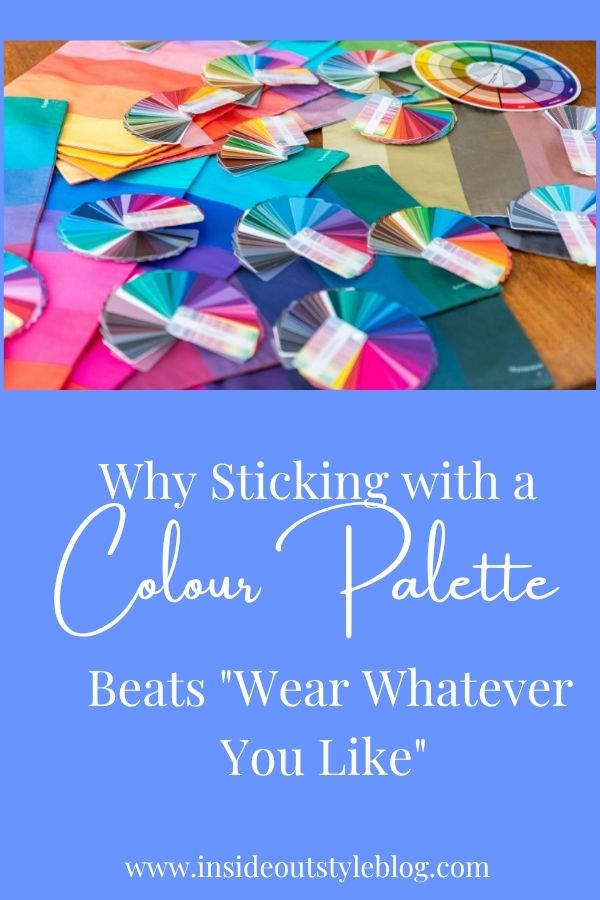
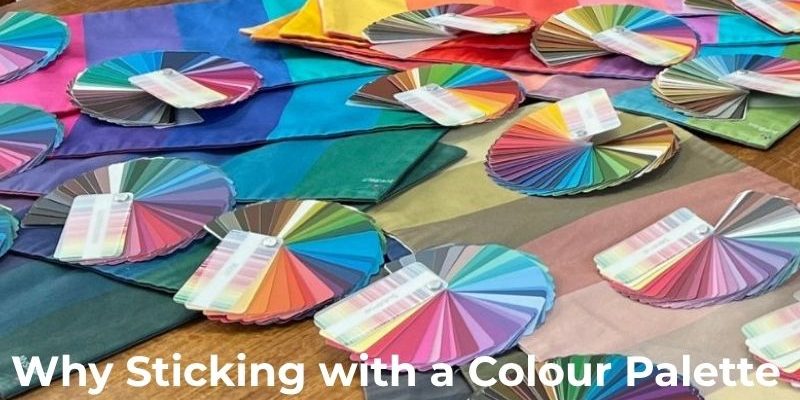
Fifty colours is not a tiny box, and that is the clever part. It is wide enough to play with: neutrals and the rainbow. But every colour has been picked to work with your colouring and every other colour in the palette. Your direction comes from a colour analysis where we drape fabric against your face and assess undertone, value, and intensity together, rather than just two of the three.
Think of it as the Green Eggs and Ham effect for your wardrobe. One sensible rule (stay inside your palette) and then every outfit you build is a small creative puzzle, not a guess. The rule does the dull work of keeping you flattered. You do the fun work of combining.
One honest note. A palette is a helpful rule only if you choose it and want it. If it turns into a list of things you are “not allowed” to wear, it becomes pressure, not play. Use it like a playlist, not a prison guard. Step outside it when you have a reason, and enjoy knowing it is there.
Seven Constraints to Play With This Week
If you know your palette, use it. If you do not, use the colours you already get compliments in. Pick one a day.
- The one-colour day. Build an outfit around a single colour you love. Add neutrals only. Notice how fast the choice becomes.
- The three-colour rule. Wear only three colours today, neutrals included. Count them before you leave the house.
- Match the property. Pick two or three colours that are all soft, or all bright, or all warm. Mix them freely. This is the Step 3 secret in action.
- One hero, three ways. Choose one favourite top or dress. Build three different outfits around it over the week. Photograph each.
- The one-shelf challenge. Dress only from one shelf or one rail. Limits make you look twice at things you have stopped seeing.
- Borrow from nature. Take a photo of a flower, a sunset or a stretch of autumn leaves. Dress in the colours of the picture. Nature has already worked out which colours get along.
- The five-minute timer. Set a timer for five minutes and choose before it rings. A kind of pressure, but a friendly kind. It stops “perfect” from creeping in.
At the end of the week, ask yourself one question. On which day did getting dressed feel the most fun? My bet is it was a day with a rule.
Your Next Step
If you want to know exactly which colours make you glow and how to mix them with ease, Step 3 of 7 Steps to Style walks you through your colour properties and gets you a personal colour analysis so you find your best palette plus all your contrast levels, so your best outfits stop being a lucky accident or you can just invest in a personal colour analysis online with me here.
Finding Your Perfect Palette: The Evolution of Personal Colour Analysis