







Stop Buying Clothes. Start Seeing What You Already Have.
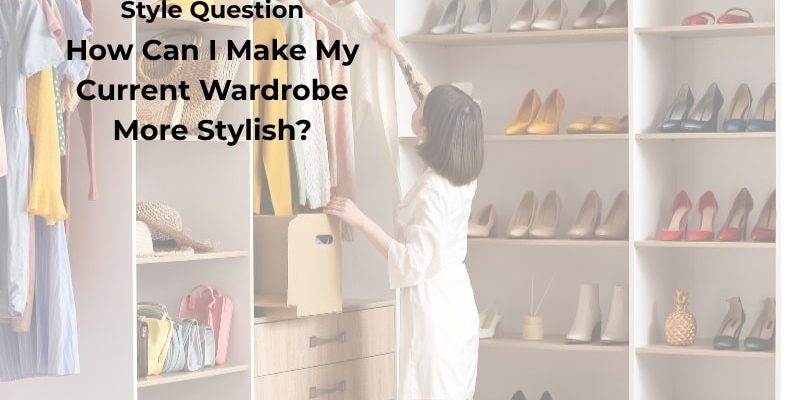
We’re looking into the next most Googled question about style: “How Can I Make My Current Wardrobe More Stylish?”
If you go on social media, the answer will be to shop more. Follow some influencer’s list (that they’re getting paid to promote) and supposedly your style will be sorted. There is no one answer to this question, so let’s look at some things that may assist you in upping your style game without endless, mindless shopping.
 The Wardrobe Full of Nothing to Wear
You open your wardrobe. It is full. Genuinely, objectively full, clothes pressing against each other, an archaeology of purchases spanning years, possibly decades. And yet the feeling that descends is one of scarcity. Nothing to wear. Nothing that works. Nothing that feels like you.
This is one of the most common experiences women bring to me, and one of the most misunderstood. The instinct it triggers is almost universal: go shopping. Find the missing piece. The right jacket, the perfect pair of trousers, the one thing that will finally make everything else click into place.

But here is what over twenty years of working with wardrobes has taught me: the problem is almost never a shortage of clothes. It is a shortage of seeing.
And no amount of shopping fixes a seeing problem.
Why We Go Blind to What We Own
There is a well-established psychological phenomenon called the mere exposure effect, first documented by social psychologist Robert Zajonc in 1968. His research demonstrated that repeated exposure to a stimulus, an image, a sound, or an object initially increases our positive feelings toward it. But beyond a certain point, familiarity breeds not contempt exactly, but invisibility. We stop seeing what we see every day.
This is why the painting you loved when you first hung it eventually disappears into the wall. It is why you stop noticing the view from a window you pass every morning. And it is precisely why the clothes hanging in your wardrobe become, over time, effectively invisible to you.
You are no longer seeing your wardrobe. You are seeing a vague impression of it, a blur of familiar shapes and colours that your brain has filed under “known” and stopped processing with any real attention.
The result is that genuinely good garments, things you spent real money on, things that fit well, things that once made you feel wonderful, sit unworn, not because they are wrong, but because you have stopped being able to see them clearly enough to know how to use them or you just feel bored and desire a new dopamine hit that you get if you go shopping.
I clearly remember a client before a wardrobe audit session saying she was bored with her wardrobe and everything in it was plain and dull. So imagine my surprise when I stepped inside it to discover that it was full of fabulous hero garments, gorgeous colours and textures. She’d just gotten so used to seeing it and wearing the garments in only one way that she no longer realised its potential.
The Other Layer: Emotional Archaeology
Wardrobes are not just collections of clothes. They are emotional archives.
Every wardrobe contains, alongside the functional pieces, a complicated assortment of what I think of as emotional artefacts. The dress you wore to a significant event that feels hard to let go of. The jeans from three years ago, when you were a different size and a different version of yourself. The pieces you bought in a moment of aspiration, for the woman you were going to become, the holiday you were going to take, the version of your life that hasn’t quite materialised.
These pieces take up physical space in your wardrobe. But more significantly, they take up psychological space. They create noise. They introduce guilt, confusion, and a vague sense of inadequacy every time you open the door. And they make it harder, not easier, to see and use the things that genuinely work for you.
Research in environmental psychology, including work by Roster and Ferrari on the relationship between clutter and psychological well-being, has found consistent links between cluttered environments and elevated stress, reduced focus, and a diminished sense of self-efficacy. Your wardrobe is an environment. And a cluttered, emotionally noisy wardrobe is quietly undermining your confidence every single morning, and it’s also inducing decision fatigue, not the ideal way to start out your day.
Clearing the emotional archaeology is not just tidying. It is a form of self-respect.
What Image Consultants Look for First
When I open a client’s wardrobe for the first time, I am not looking at individual pieces and ticking off an idealised list. I am looking at the wardrobe as a system, and specifically, I am looking for the reasons the system is failing.
Those reasons, in my experience, fall into a handful of consistent patterns.
The first is proportion imbalance. Most wardrobes are heavily weighted toward one category, and it’s either a style of garment that is easy to fit on your body so therefore more readily available to buy (tops is common becuase pants can be hard to find), or for the more “fun” aspects of your life, social events get new and better quality clothing, whilst the more mundane, the serious work clothes, get overlooked because they don’t inspire you in the same way. So when you have lots of tops and no bottoms, or lots of socialising clothes and nothing much to wear to work, this creates a situation where nothing can be easily put together, because the building blocks of a complete outfit are missing.
The second is colour fragmentation. When a wardrobe has been built piece by piece, without a coherent colour strategy (the strategy you get from having a personal colour analysis and a palette to use as your guide), the result is a collection of items that each work individually but don’t work together. Everything is an orphan. Nothing has a partner.
The third is fit inconsistency. Most wardrobes contain a wide range of fits: some that fit beautifully, some that almost fit, and some that were bought with the optimistic intention of alterations that never happened. The pieces that don’t fit well are the ones that never get worn, even when they are technically good pieces. They are also the ones that make you feel worse about yourself when you try them on in the morning and put them back on the hanger, or knowing they don’t fit you, you keep bypassing them, and they just inspire feelings of shame and guilt.
The fourth, and perhaps the most interesting, is what I call style fragmentation, pieces that belong to different visual identities or time periods. The structured, corporate pieces from one chapter of your life that no longer exists, sitting alongside the bohemian prints from another, alongside the casual weekend pieces, alongside the one or two things that are simply, inexplicably you. No wardrobe conversation is happening between these pieces. They are strangers sharing a rail, some get worn, others ignored, and sometimes there are ways to combine them that you haven’t yet thought about, as you’ve only ever worn one of these identities at a time.
The Principles That Transform Without Shopping
Here is something the fashion industry would prefer you not to know: the principles that make outfits look polished, put-together, and genuinely stylish are not about the clothes themselves. They are about how the clothes are combined, proportioned, and worn.
Which means you can apply them to what you already own.
Line and silhouette are the most powerful tools in any stylist’s kit, and the most underused by women dressing themselves. Every garment has a line, the direction in which it draws the eye. Vertical lines create the visual impression of length. Horizontal lines create width. Diagonal lines create movement and interest. When you understand the lines in your existing pieces, you can begin to combine them intentionally rather than accidentally, and the difference in outcome is significant.
Proportion is the relationship between the parts of an outfit. The length of a top relative to the length of a trouser leg. The volume of a skirt relative to the fit of a jacket. Getting proportion right is what separates an outfit that looks considered from one that looks slightly off, even when you can’t articulate why. The good news is that the proportion is adjustable without spending a cent. By tucking, half-tucking, folding, pinning, and layering, you can shift the proportions of pieces you already own.
Fabric weight and texture play a more significant role than most women realise. A silk blouse combined with a heavy tweed creates textural tension. Lightweight fabrics layered together can create a soft, fluid elegance. Understanding fabric conversation, how different weights and textures speak to each other, unlocks combinations you’ve never tried because you didn’t have a framework for thinking about them.
Colour relationships within an outfit are governed by principles that have nothing to do with fashion trends. Tonal dressing (monochromatic), combining shades of the same colour family, creates an effortless, elongating effect, but if you only dress in the one colour, it can also become boring if you don’t add interest through a variety of textures or pops of an alternate colour in accessories. Value contrast dressing, combining light and dark, creates definition and impact and is great if you have a high value contrast in your natural colouring (say dark hair with fair skin), but will completely wear someone who has both light hair and skin. Understanding which colour relationships work for your colouring and your personality allows you to use the colours already in your wardrobe far more effectively.
The Fresh Eyes Method
The single most useful thing you can do with your existing wardrobe, before you consider buying a single new thing, is to look at it with fresh eyes. Not the eyes that have seen it every day for three years. Fresh eyes.
Here is how I approach this with clients.
Take everything out. Not just the things you wear regularly, but everything. Remove it all, hang it somewhere else or lay it on a bed, and then bring it back piece by piece with the deliberate intention of seeing each item as though for the first time.
Firstly, try every garment on and assess for:
- Fit – does it still fit you? As I am now, not what I was, or what I hope to be one day?
- Is it still in good condition? No pills, tears, holes, fade, stains etc.
- Comfort – is it comfortable to move in and wear? Does it feel good to wear? Is it itchy or scratchy? Does it feel binding or constrictive?
- Colour – does it make you shine or drain you of life? Does it go with other coloured and neutral items in your wardrobe, or is it an outlier?
- Do I already have at least 3 garments I can wear this with?
- Does it work for my current lifestyle? Location? Climate?
- Does it feel like the person I am today? Do I get excited about the possibility of wearing it? Can I see myself reaching for this in the future?
Anything that cannot answer yes to all seven questions is either a candidate for alteration, a candidate for releasing, or a candidate for being moved to a separate holding space while you work through the rest.
What remains after this process is almost always smaller than the original wardrobe, and dramatically more functional. Women regularly discover, in this process, pieces they had completely forgotten about. Things that genuinely work. Things that, now that they can see them, are exactly what they needed.
The missing piece was not in a shop. It was in the wardrobe all along.
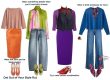
Then it’s time to challenge yourself to wear each item in multiple ways across different outfits. We get into the habit of wearing outfits the same way over and over, rather than considering what else we could pair together.
Why not pair your crisp business shirt with a denim skirt or jeans and a statement necklace?
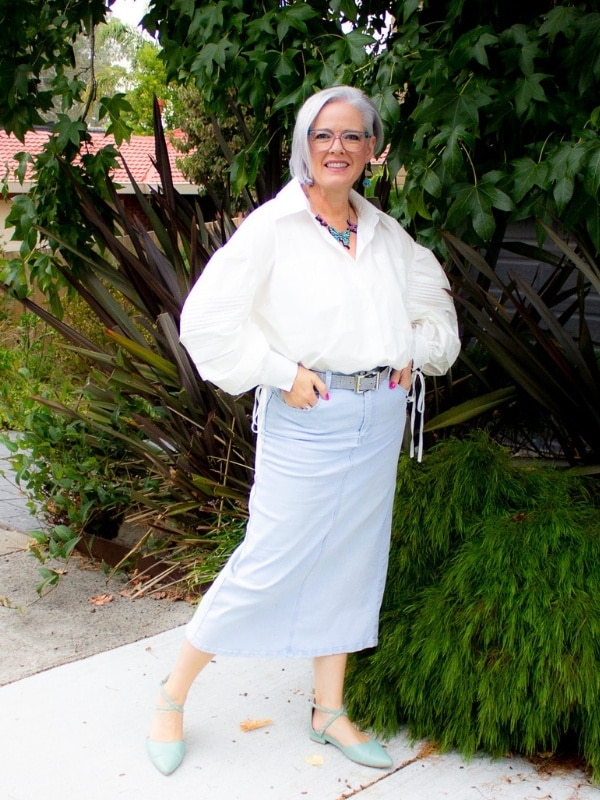
Consider mixing your prints and patterns when they have colours in common. If you’re a little scared, start with a scarf as your second patterned piece rather than two garments in patterns. I’ve got lots of tips here on how to mix prints and patterns successfully.
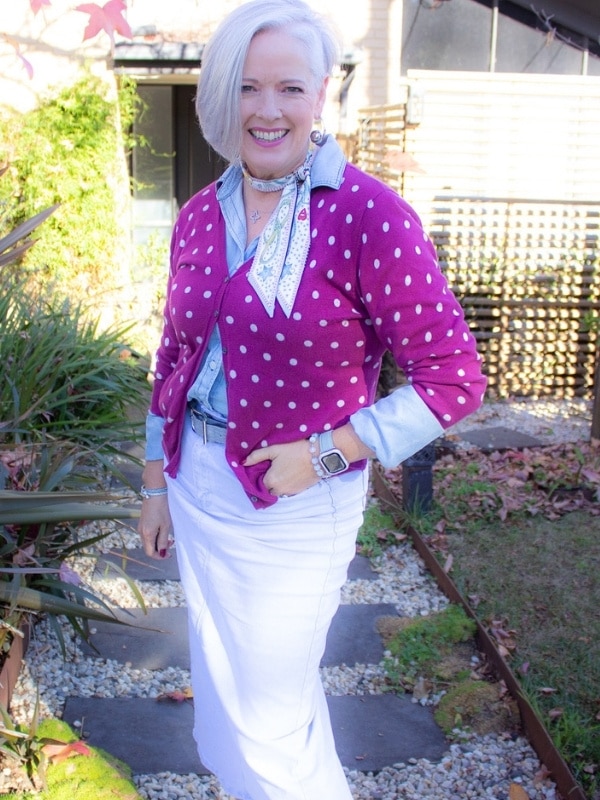
Dress down a more formal dress with a casual jacket. Or mix a more formal skirt with a relaxed chambray shirt.
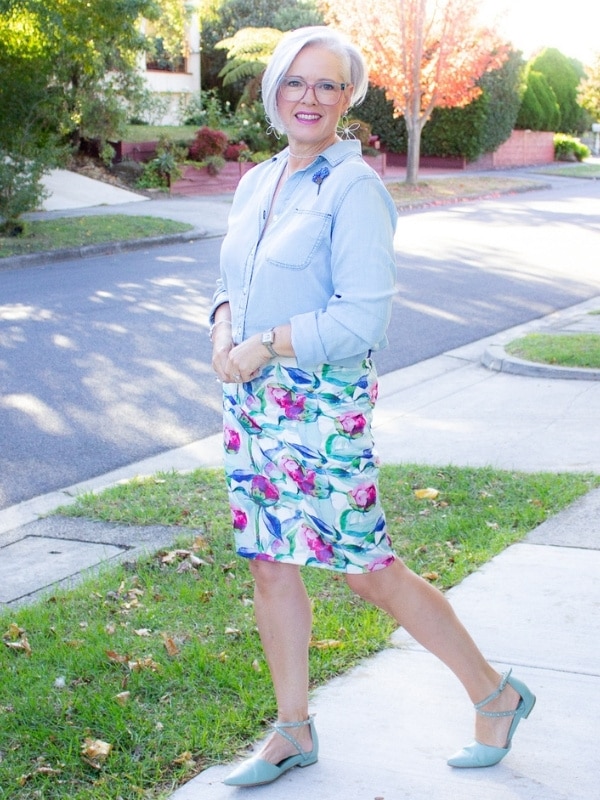
Dress up your jeans with your suit jacket and that boho blouse. The possibilities for creating new outfits from what you already own are endless, and the benefit? You get that dopamine hit from doing something new, without having to spend any more money!
The Three Easiest Ways to Elevate Any Outfit
1. Fit
If I had to name one single thing that makes the most immediate, visible difference to how an outfit looks, it would be fit.
Not buying better clothes. Not investing in designer pieces. Not following trends. Fit.
A medium-quality garment that fits perfectly will always look more expensive, more polished, and more intentional than a high-quality garment that doesn’t. This is one of the most consistent observations I have made across two decades of working with wardrobes at every budget level.
Most women have pieces in their wardrobes that are one alteration away from being excellent. A shortened sleeve hem makes the whole jacket look the right size. A seam taken in at the waist. A top or skirt hem adjusted to just the right proportional point. These are inexpensive interventions, far less expensive than a new purchase, and the difference they make to how a garment looks and how you feel wearing it is transformative.
Before you shop, I would ask you to identify the three pieces in your current wardrobe that are closest to working, the ones that almost fit, that almost feel right, and take them to a tailor. The investment will almost certainly cost less than a new piece and deliver more satisfaction than anything you could buy.
2. Add a Third Piece
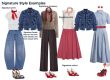
The second way to elevate any outfit is to add a third piece. This may be a jacket or outer layer; the structure of a jacket, even a denim jacket, instantly adds more polish to a casual outfit. It could be a patterned coloured scarf with an otherwise neutral outfit. It might be a feature belt to a plain dress.
3. Accessorise
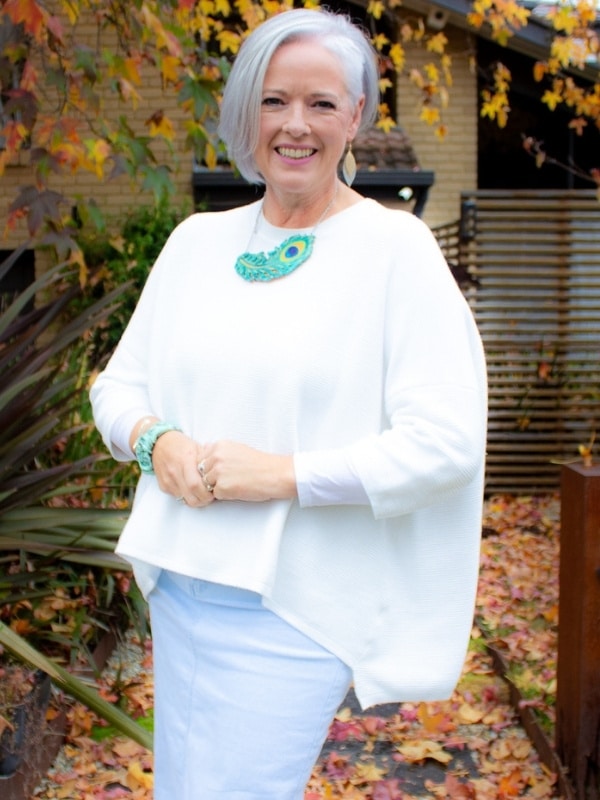
Leading on from this is the third way to elevate any outfit, and that’s to add a suite of accessories. Unless your garment is already a hero, anything plain needs some accessories to add visual interest. Think a statement necklace, earrings or brooch, a stack of bangles and bracelets, and some rings. These all add focal points and visual complexity, which is something our brains do enjoy, plus the added bonus is that they draw attention and give your outfit focal points. Consider a coloured or patterned shoe or belt. Scarves in alternate colours or that are made from interesting textures. There are so many options with accessories to consider and play with. They take an otherwise bland and simple outfit and turn it into something unique, interesting and personal.
 The Fashion Industry Wants You To Buy
The fashion industry is built on the premise that the solution to your style dissatisfaction is always something new. A new season, a new trend, a new purchase, a new beginning. That’s how they stay in business.
But the research on decision fatigue, on wardrobe utilisation, on the psychology of clutter and choice, all of it points in a different direction. The solution is not more. It is clarity. It is self-knowledge. It is the willingness to look at what you already have with enough attention and intelligence to understand what is actually there.
Your wardrobe already contains more than you think. The work is not to fill it. The work is to finally, properly, see it.



Great post, Imogen! The more exposure effect is a stumbling block for me for sure. I need to have a dig around and see what is old that can be new again. Thanks for the reminder and the psychology behind it.
Very inspiring! Can’t wait to take another look at my wardrobe. Thank you Imogen.