






The Most Googled Style Question That Isn’t Really About Style
Have you ever typed into Google something on the following lines: How to wear [specific item] (e.g., barrel-leg jeans, sneakers, oversized blazer)…
Every day, millions of searches are typed into Google that follow a familiar pattern. How to style a blazer. How to wear an oversized shirt. How to style ankle boots. How to wear wide-leg trousers. How to dress up a basic white tee.
These are, on the surface, practical questions. They want practical answers. And the internet obliges, generously and immediately, with thousands of articles, videos, and image carousels showing you exactly how seventeen different influencers have styled the item in question, usually in seventeen different ways, all of which look effortless and none of which quite translate when you try them in your own bedroom mirror on a Tuesday morning with the clothing you currently own, or that translate to the body and colouring that you have.
The reason they don’t translate is not that you lack the skill to replicate them. It is that you are trying to import someone else’s solution into a context, your body, your personality, your wardrobe, your life, for which it was never designed.

The “how to style” question is, underneath its practical surface, a question about something more fundamental. It is a question about principles. About why some things work, and others don’t. About what is actually happening, visually and psychologically, when an outfit succeeds. And once you understand the principles, you no longer need to ask how to style any specific item. You already know.
Why “How to Wear” Content Is the Most Popular and Least Useful Style Advice Online
The dominance of “how to style” content in the style media landscape is not accidental. It is the product of a content model that rewards specificity, searchability, and the promise of an immediate, actionable answer.
“How to style a blazer” is a searchable query. “How to develop a genuine understanding of your own proportions and visual language so that you can make confident styling decisions about any garment independently” is not. So the content ecosystem produces the former, in enormous quantities, and largely ignores the latter.
The result is a style education landscape that is, paradoxically, both information-rich and knowledge-poor. There is more style content available online than at any point in human history, and yet the fundamental literacy required to make genuinely good, independent style decisions, the ability to look at a garment and understand what it will do on your specific body, in combination with your specific other garments, for your specific occasions, is no more widely distributed than it ever was.
This is not a criticism of the people producing “how to style” content (cos I’m one of them). Much of it is genuinely useful as inspiration and as a starting point. The problem is when it becomes the ending point, when women believe that the goal of style education is to accumulate a library of specific outfit formulas that they can replicate, rather than to develop the underlying principles that would allow them to generate their own formulas indefinitely.
The difference between these two approaches is the difference between being given a fish and learning to fish. Except in this case, the fishing analogy understates the problem, because fish are fish. Outfits are not transferable. An outfit formula that works on the person who created it works because of their specific body, their specific colouring, their specific existing wardrobe, and their specific personality. Replicating it on a different body, in a different wardrobe, with a different personality, produces a different result, often a disappointing one.
The Three Principles Behind Every Great Outfit
If specific outfit formulas are not the answer, what is? The answer is principles: the underlying mechanics of why outfits work, which apply across garments, across bodies, across aesthetics, and across occasions.
There are three principles that I return to consistently in my work with clients, because they are the ones that do the most explanatory work across the widest range of situations and are based on the science, maths and art of style and design. 1. Proportion
Proportion is the relationship between the parts of an outfit, and it is the principle that separates outfits that look considered from outfits that look slightly off without any obvious reason. Proportion operates at multiple levels simultaneously: the relationship between the length of a top and the length of a trouser, the volume of a jacket relative to the silhouette of a skirt, the height of a shoe relative to the hem of a dress. And, your own personal proportions, the length of your legs as compared to your torso. Whether you have a short or long waist, rise, thigh etc.
When proportion is right, an outfit has a visual logic that registers as elegance, even when the individual pieces are simple or inexpensive. When the proportion is wrong, something nags at the eye even when nothing is technically incorrect.
Understanding proportion for your specific body requires knowing where your body’s natural divisions fall, where your waist sits relative to your hips, where your longest flattering hemline lands, and what volume your frame can carry without being overwhelmed or looking underdressed. These are learnable, specific pieces of self-knowledge that, once acquired, inform every outfit decision you make for the rest of your life.
2. Line
Line refers to the directional energy of a garment, the way seams, cuts, hems, and fabric details direct the eye across and around the body.
A vertical seam running from shoulder to hem creates a lengthening visual effect.
A horizontal band across the widest point of the hip draws the eye there and creates width.
A diagonal cut creates movement and energy.
Curved lines can soften a garment and make it more approachable, they can add volume to a body, and they can also move the eye (a little like a diagonal).
Understanding the lines in your existing garments and how they interact with the lines of your body allows you to predict, before you put something on, whether it is likely to work for you. This is not an advanced skill. It is a basic visual literacy that, once learned, becomes automatic.
3. Contrast
Contrast is the degree of visual difference between the elements of an outfit, in terms of both colour and tone. High value-contrast outfits, those combining very light and very dark elements, create visual impact and definition. Low value-contrast outfits, those combining elements close in tone, create a softer, more elongated, more understated effect. The level of value contrast that works best for you is closely related to your own natural contrast level, the degree of difference between your skin tone, hair colour, and eye colour. Dressing at a contrast level that broadly matches your own creates a harmony between your clothes and your colouring that registers as “put-together” without any specific element being identifiable as the reason.
Then there is colour contrast – the difference in the colours of your hair skin and eyes, whether you have a lot of different colours (such as a red-head with blue eyes and peachy skin) and have a high-colour contrast and look your best when wearing multiple colours at once. Or you have brown hair, brown eyes, and neutral beige skin with low colour contrast, and you suit more monochrome or neutral outfits. Or you’re somewhere in between, some neutral, some colour is required in every outfit.
How to Read Your Own Body Intelligence
There is a kind of knowledge about your own body that develops over time and with attention, a practical, embodied understanding of what works and what doesn’t that goes beyond measurements and beyond the abstract categories of body shape typing.
I think of this as body intelligence, and it is one of the most valuable and most undervalued aspects of personal style development.
Body intelligence is not knowing your measurements, though knowing them is useful when shopping online for fit. It is knowing, from experience and reflection, that a certain neckline makes your neck look shorter and another makes it look longer. That a certain trouser rise makes you feel comfortable and grounded, and another creates constant physical self-consciousness. That a particular fabric drapes beautifully on your frame, and another creates unwanted volume. That you feel most like yourself in a certain silhouette and subtly unlike yourself in another.
This kind of knowledge is built through deliberate attention rather than passive experience. Most women have been wearing clothes their entire adult lives without developing it, because they have been paying attention to whether they like a garment rather than to what the garment is doing on their specific body.
The shift required is a shift in the quality of attention. Not just to “do I like this?” but “what is this doing?” Not “does this look nice?” but “what is this communicating?” Not “is this comfortable?” but “what specifically about the fit or the fabric or the silhouette is creating this feeling, and what does that tell me about what my body needs?”
Then there is the element of personality, which can’t be underestimated. When you have that feeling and thought in the change room, “It’s not me” when trying on a garment, even if the fit is great and your body looks absolutely great in it, sometimes a garment just isn’t your personality, and it makes you feel like you’re wearing a costume for a character that is unlike you.
It’s the reason that personality is Step 1 of my 7 Steps to Style program – where I teach you these skills, the science, the math and the art of personal style. Because I know that you need the full picture, not just a part. It’s not just body shape, or colouring, or personality and lifestyle, it’s the complete style puzzle you need to solve for you as an individual.
This kind of reflective attention is what image consultants are trained to apply on behalf of their clients. It is also entirely teachable as a self-directed practice, and once developed, it transforms the shopping experience, the fitting room experience, and the daily getting-dressed experience in ways that no library of outfit formulas ever could.
The Difference Between Imitation and Principled Styling
The distinction I am drawing throughout this post is the distinction between imitation styling, copying specific looks and outfit formulas from external sources, and principled styling, making outfit decisions from an internalised understanding of why things work.
Both have their place. Imitation styling is a legitimate learning tool, particularly in the early stages of style development. Looking at images of women whose style resonates with you, identifying what specifically appeals about the outfits you are drawn to, and asking what principles are at work in those outfits, is a perfectly valid way of developing your own visual vocabulary. The problem arises when imitation remains the endpoint rather than a step toward independent understanding.
The psychological research on skill acquisition is relevant here. Researchers in the expertise literature, including work by Anders Ericsson on deliberate practice, have established that the development of genuine competence in any domain requires moving beyond imitation and rote application of learned procedures toward the development of flexible, generative knowledge that can be applied to novel situations. Style is no different. Expertise in dressing is not knowing many outfit formulas. It is understanding the principles that allow you to generate new solutions in any situation you encounter.
The woman who has developed principled styling can walk into a vintage shop, a high street retailer, or a charity shop, pick up a garment she has never seen before, and make a confident, informed assessment of whether it will work for her body, her wardrobe, and her aesthetic. She does not need to find a “how to style” article about that specific item. She has already internalised the framework that the article would, at best, imperfectly approximate.
That is the goal. Not a bigger library of formulas. A more robust and generative set of principles.
Using Specific Items as a Teaching Tool
There is, I want to acknowledge, a genuinely useful version of the “how to style” question. It is the version that uses a specific item not as the endpoint of the inquiry but as a vehicle for developing broader understanding.
A blazer is a particularly rich teaching tool in this respect, because it illustrates so many styling principles simultaneously. The relationship between blazer length and trouser length is a masterclass in proportion. The question of whether to button or leave open, to roll the sleeves or leave them as cut, to wear with a visible lapel or to layer underneath, is an introduction to how small adjustments create significant changes in the visual message of a garment.
The question of when a blazer reads as professional and when it reads as casual is an entry point into the broader discussion of how clothing communicates and how context shapes that communication.
Similarly, an oversized shirt raises questions about proportion and silhouette that, once answered for that specific garment, generate transferable knowledge applicable to any voluminous garment.
Ankle boots raise questions about hemline and leg length that apply to every shoe-and-hem combination you will encounter for the rest of your life.

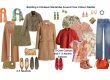
Here’s an example of an outfit I could use to show you how to mix patterns (small with larger), wear double denim, or style a denim skirt/chambray shirt, just as starter points. It’s not about you copying this exact outfit; it’s about understanding why it works, the principles of image consulting that make it work.
The invitation, when you encounter a specific styling question, is to push past the specific answer toward the principle it illustrates. Why does tucking this shirt in work better than leaving it out? What specifically is happening visually? What is the principle, and where else does that principle apply?
That curiosity is the beginning of genuine style intelligence.
Moving From “How Do I Style This?” to “I Understand How to Style Anything”
Developing Your Style Intelligence.
It does not mean knowing the most trends. It does not mean owning the most clothes or spending the most money. It does not mean having an Instagram-worthy wardrobe or the ability to replicate any look you see online.
Style intelligence means having developed, through self-knowledge and through understanding of the principles that govern how clothing works, the capacity to make genuinely good, independent style decisions. Decisions that are grounded in who you are, that work for your specific body, that serve your actual life, and that communicate what you want to communicate to the world.
This is a learnable skill. Every post in this series on the top 10 most Googled style questions, has been, in different ways, contributing to the foundation of that skill: understanding that style begins with identity rather than aesthetics, that wardrobe building requires self-knowledge rather than generic lists, that your existing wardrobe contains more than you think if you can learn to see it clearly, that your clothing is already communicating whether you intend it to or not, that your body is not a problem to be solved but a specific set of parameters to be understood, that trends are a tool rather than a mandate, that professional dress is a form of communication that can be mastered rather than a minefield to be navigated, that colour is a science rather than a preference, and that confidence follows intentional dressing rather than preceding it.
These are not ten separate lessons. They are ten facets of a single, coherent understanding: that style is a form of self-knowledge expressed visually, and that developing it is one of the most practically useful and personally rewarding things a woman can do for herself.
The Internet Will Tell You How to Style a Blazer. It Won’t Tell You Whether You Should.
We began this series with the most googled style question on the internet: how do I find my personal style?
Ten posts later, I hope the answer is clearer. You do not find your personal style in a search result or a quiz or a “how to style” video, though all of these can be useful waypoints along the road. You develop it, through self-knowledge, through understanding of principles, through deliberate attention to what works and why, and through the ongoing, evolving practice of dressing as the specific, irreplaceable person you actually are.
The internet will keep producing outfit formulas. Trends will keep cycling. Shopping will keep presenting itself as the solution to a problem it helped create.
And you, with the foundation this series has been building, will have something considerably more useful than any of that: an understanding of yourself and of the principles of style that allows you to navigate all of it with intelligence, with intention, and with a confidence that was yours all along.
It was just waiting for you to get dressed.
Your Next Step: The 7 Steps to Style Program
Ten posts on the most Googled questions. Ten dimensions of the same essential truth: that style is a learnable skill, that it begins with self-knowledge rather than shopping, and that the women who dress most powerfully are the ones who understand themselves most clearly.
If this series has resonated with you, if you have found yourself nodding at a screen, feeling seen by research you had never encountered before, or finally understanding why your wardrobe has never quite worked the way you hoped, then I want to tell you about the program I have been quietly building toward across all of it.
The 7 Steps to Style program is where everything this series has introduced becomes something you actually apply to your specific body, your specific colouring, your specific life, and the specific woman you are right now.
It is not a trend guide. It is not a generic capsule wardrobe list. It is a structured, evidence-based program that walks you through exactly what we have been discussing here, from personality and self-expression through colour analysis, body intelligence, wardrobe editing, and outfit building, in a sequence designed to build genuine, lasting style literacy rather than a temporary fix.
Here is what it includes
- Your personal colour analysis using my Absolute Colour System, the 18-palette system we discussed in Post Eight, which identifies your specific palette with the kind of precision that four seasons simply cannot achieve. You receive your digital palette and a mailed colour card for real-life shopping support, so you never have to guess again in a fitting room.
- A professional body and face shape analysis that goes well beyond the four-shape system we discussed in Post Five, giving you specific, individual insight into your proportions and the principles that work with them.
- The full seven-step program itself, covering personality, body, colour, lifestyle, wardrobe, style, and values, in a structured sequence that builds your understanding layer by layer, at your own pace, in your own time.
- Six months of access to the VIP community, the 7 Steps to Style Sisters, where trained personal stylists answer your outfit questions and a group of like-minded women provides the kind of honest, supportive feedback that most of us have never had access to before.
- Monthly live Q&A sessions with me directly, all recorded and fully searchable so you can find the answers to your specific questions whenever you need them.
- And lifetime access to all program materials, because style is not a destination you arrive at once. It is a practice that evolves as you do, and your program should be there to support that evolution for as long as you need it.
The investment is USD $297 as a single payment, or USD $58 per month across six months if you prefer to spread the cost.
The women who have come through this program consistently describe the same shift: not just that they feel better about their clothes, though they do, but that they feel more like themselves. More visible. More confident in the spaces they occupy. More intentional about how they show up. Sara Kimmel, who went through the program, described it as game-changing, and the surprise for her was not the colour or the body analysis, but the personality and values work, which she described as taking her style to another level. Vicki, from Australia, found that her whole approach shifted: from a wardrobe of dark blazers to one she genuinely enjoys wearing, and a style she feels will carry her into the next chapter of her life.
That is what this program is for. Not the chapter you have already lived. The one you are stepping into.
If you are ready to stop guessing and start understanding, to move from a wardrobe that confuses you to one that confirms you, the 7 Steps to Style program is where that journey begins properly.
Find out more and join the program here.