






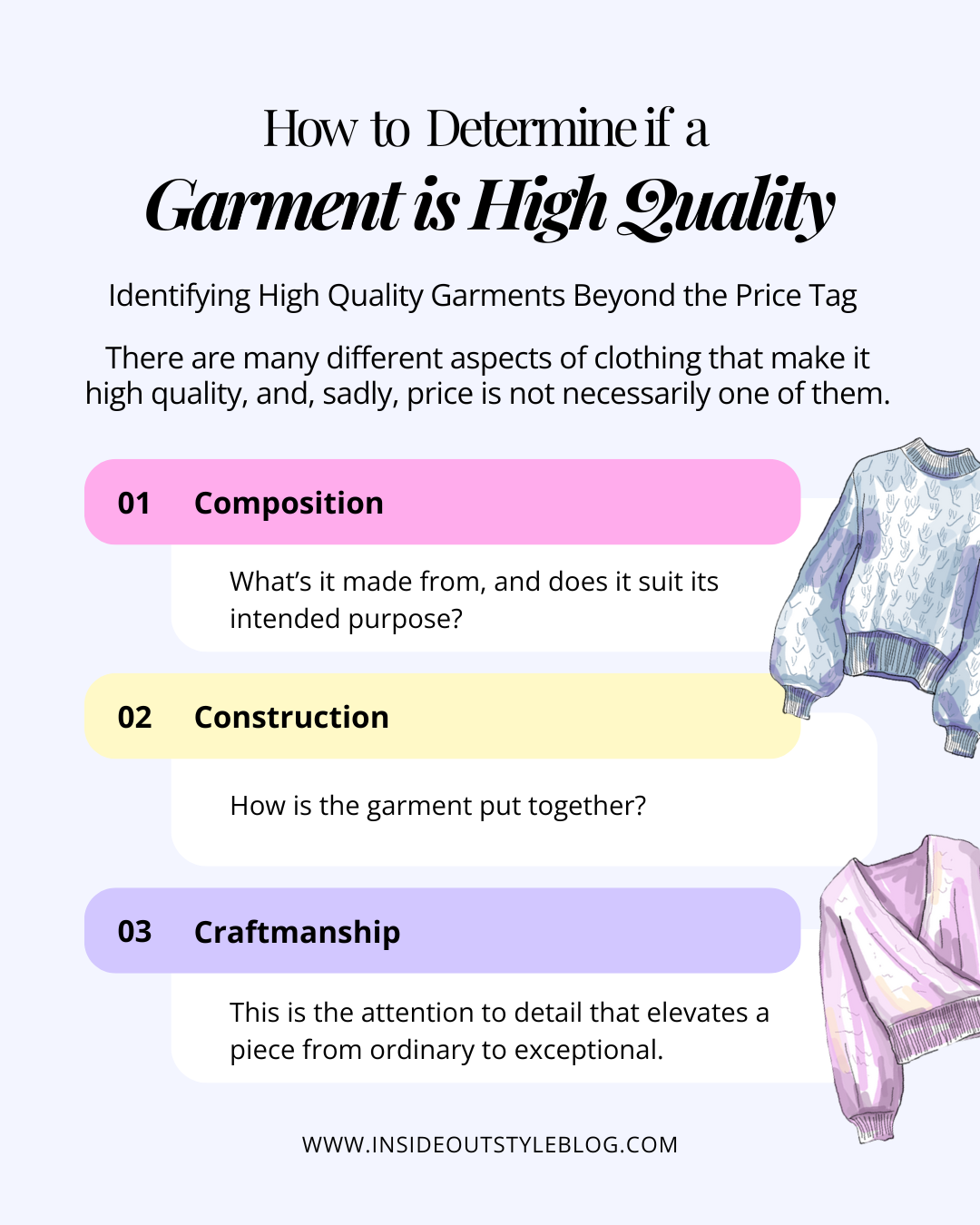
Identifying High Quality Garments Beyond the Price Tag
There are many different aspects of clothing that make it high quality, and, sadly, price is not necessarily one of them.
Have you ever bought an expensive piece only to find it pilled, twisted, or misshapen after a few washes? Frustrating, isn’t it?
While fabric choice plays a major role (I personally avoid acrylic as it wears very poorly), there are three other essential factors to consider before investing in any garment:
Composition
What’s it made from, and does it suit its intended purpose?

Ask yourself:
- Does the fabric provide longevity for how you’ll use it?
- Is it the right weight and drape for your lifestyle needs?
- Is it comfortable to wear? Does it breathe? Does it crush easily?
- How do you feel about dry cleaning? Ironing? Check the care instructions and be prepared to take the right kind of care of a garment.
- Is it sturdy and functional? Or delicate and luxurious, where that’s appropriate?
- Good quality natural fibres such as wool and cotton should feel smooth (not lumpy or scratchy), this is because longer staple fibres are higher quality. Short fibres create more pilling and are harder to spin into very smoth yarn. If it looks fuzzy it won’t wear well.
- Do you love how it feels against your skin?
- Is it sheer? Unless it’s chiffon, you probably want your fabric to be opaque. Hold the garment up to the light and notice if you can see through it (this relates to thread count which means it’s more expensive to produce if it’s less see-through).
It’s easy to assume “natural = good, synthetic = bad,” but that’s not always the case. There are high- and low-quality versions of every fibre – cotton, wool, cashmere included.
And while polyester gets a bad rap, sometimes a small blend of it can increase durability, reduce creasing, and improve washability.
For example, pure cotton denim will generally last longer than a cotton-elastane blend. But personally, I enjoy the comfort of denim with some stretch. Stiff, unyielding jeans that dig into the waist or restrict movement feel like punishment, not style.
Here’s what I look for in denim:
✅ Around 2% elastane – enough for comfort, movement, and ease without bagging out quickly.
❌ 5% elastane – while stretchier, it often loses shape faster and can look tired within months.
It’s all about understanding your priorities for comfort, structure, and longevity.
Construction
How is the garment put together?
Take a closer look at:
-
Seams – Are they straight and secure? Do they lie flat against the body?
-
Hems and zippers – Do they pucker or wave, indicating poor stitching or fabric stretching? Is it a tiny rolled hem or is there some additional fabric in the hem?
-
Finishing – Are raw edges clean or concealed, especially on visible areas? Stitch length, if there are fewer stitches and even loose threads it’s poorly constructed. Hold up a seam to the light and tug, if you see light passing through there are not enough stitches and it won’t wear well.
- Pockets – fake pockets are a sign of a cheap garment. Good pockets should sit flat and be smooth.
Good construction is like the architecture of a building: unseen by others but felt in how it fits, moves, and endures.
Craftmanship
This is the attention to detail that elevates a piece from ordinary to exceptional.
Look for:
- Adequate seam allowances (allowing tailoring or minor repairs).
- French seams on delicate fabrics prevent fraying.

This silk blouse has French seams – I made it and always use a French seam for additional seam strength on fine fabrics like this silk chiffon
- Metal zippers not plastic ones.
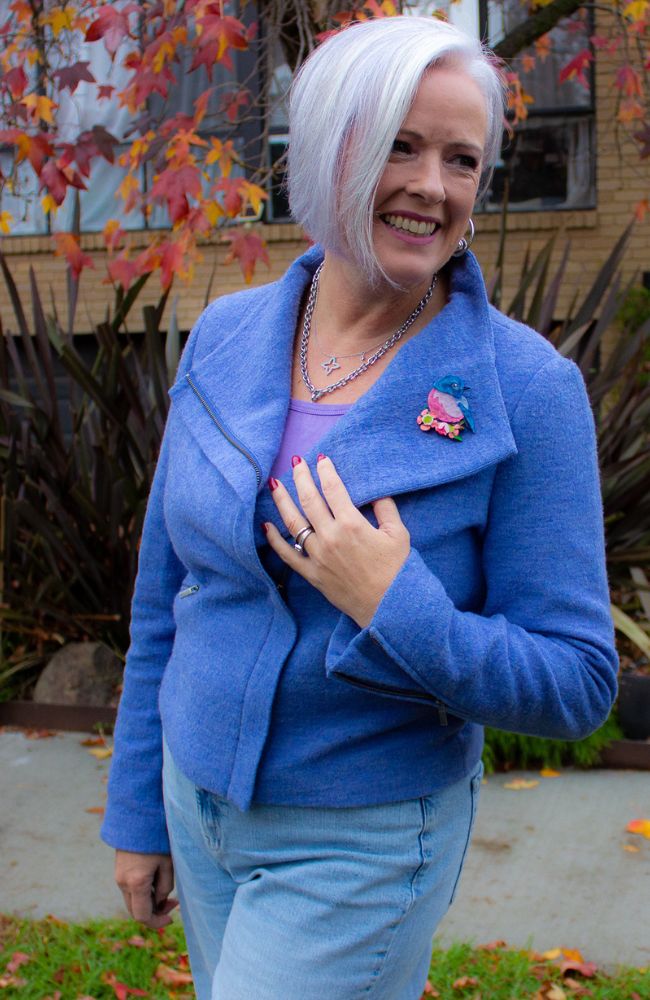
- Darts to add shape
- Linings in pants, skirts, and jackets for comfort, structure, and durability.
- A pocket design that sits flat, with enough fabric to prevent lining from peeking out.
- Spare buttons included, and existing buttons sewn on securely.
Craftsmanship reflects a brand’s respect for you as the wearer. It’s a silent promise that the garment was made with care, not just efficiency.
 Price is not a reliable measure of quality. I’ve seen plenty of designer items made from 100% polyester. The actual value comes from knowing what to look for and making intentional choices that align with your needs, values, and personal comfort.
Before your next purchase, ask:
Does this piece honour my body, my lifestyle, and my future self?
Your wardrobe becomes more empowering – and more cost-effective – when each item earns its place.
The more you know about your style, the better your buying decisions can be. If you know your personal style guidelines, then when you make an investment in a more expensive garment, you know you’ll get wear from it. This is why I encourage you to get a comprehensive education in colour and style so that you are the boss of your wardrobe and the creator of your personal style. You’re not at the mercy of the fashion industrial complex or any salesperson who may not have your best interests at heart. If you’d love to feel great in all your clothes, I’d love to invite you into my 7 Steps to Style program to help you define and discover your personal style.
Learn More About Fabrics
Your Ultimate Guide to Choosing the Best Fabrics for Your Clothes