







I know the feeling of standing in front of a full wardrobe with nothing to wear. It’s one of the most common things the women I work with tell me too. It’s easy to think that your wardrobe is lacking; it needs a new garment or two, more options, more choice. That doesn’t work unless you literally have very few clothes. Your wardrobe grows, but the dissatisfaction stays the same.
The problem is rarely quantity. It’s shopping and dressing on autopilot. Buying the same kind of items over and over (what I now call the attack of the clone wardrobe), so even if you do have it in 3 colours, they all feel the same, and that’s just boring and a recipe for style dissatisfaction.
Shopping with intention changed that. Not in a dramatic, overnight way, as I didn’t replace my whole wardrobe at once, but slowly, as my wardrobe became more me, my available choices improved. Here’s what it actually means, and why it’s done more for my confidence than any single item I’ve ever bought.
It’s Not About Trying Harder, It’s About Choosing on Purpose
It starts in the stores. Before you bring any garment home, you want to make sure it’s going to earn its place in your wardrobe and become an integral piece of your style. If it doesn’t fill an actual wardrobe gap. If it’s similar to what you own and love but not an upgrade, a better version. If it’s not an ingredient in your style recipe. Then don’t buy it. When you purchase on autopilot, you end up with a boring wardrobe. When you buy “different” because you’re bored, but you don’t understand what your sort of different is, you end up with a wardrobe of items you don’t wear because they’re not you (and that’s just wasteful clutter). If you buy it because you saw someone else wearing it, whether in real life or on social media, but you haven’t actually considered if it’s because you like it on them and if you have a similar body, lifestyle, colouring and personality, then it’s most likely not going to work for you.

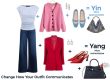
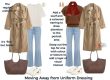
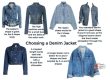
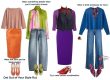
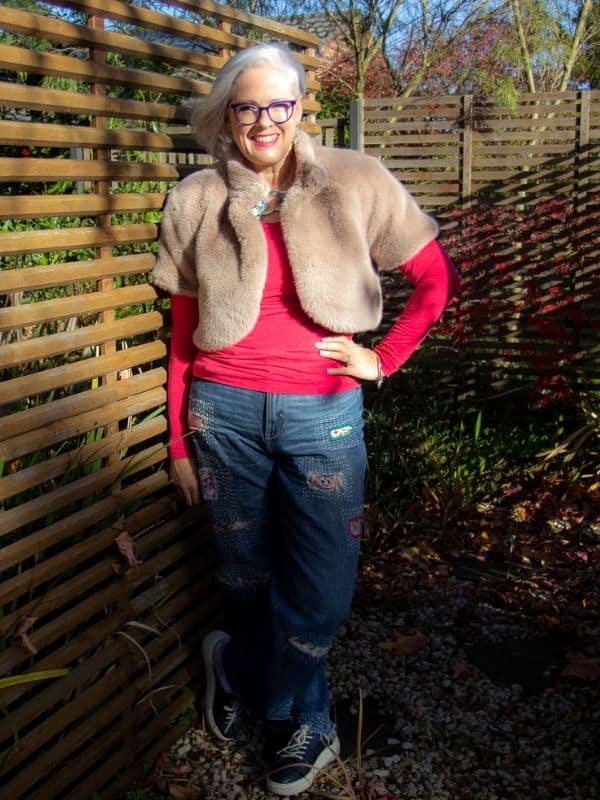
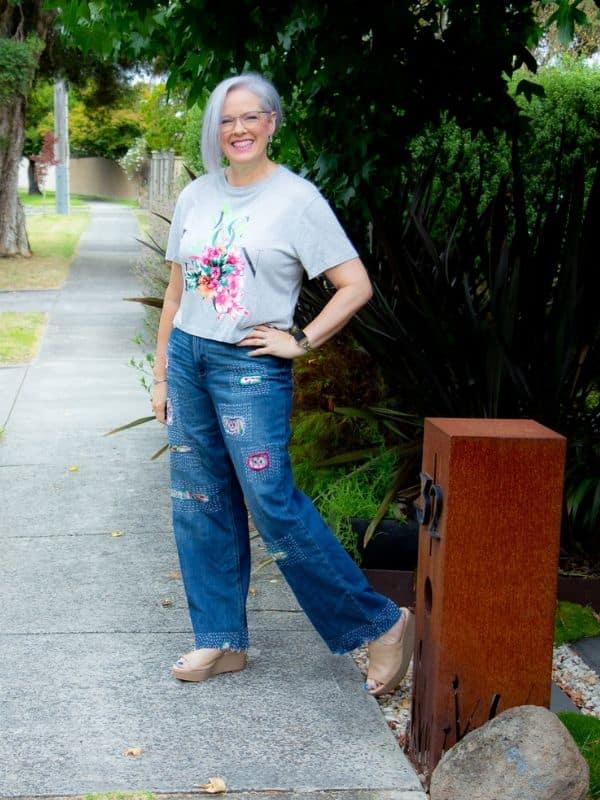
Instead, you want to invest in the pieces you’ll wear many times, in different outfits and combinations. Garments you can dress up or down, like the garments I’m sharing in this post, which are frequent staples, but I’m not wearing them in a “uniform style” way.

Understand that it’s much harder to let go of something once you own it, so making the best decisions possible in the store is imperative, and it’s why having a colour palette that works (and all the colours work together), understanding your best silhouette, and having a good grip of how your personality influences every style choice. These are all the things you need to learn before you go shopping. It’s hard to dress with intention when what you have isn’t the right things for you.
Dressing with intention doesn’t mean spending more time, more money, or more mental energy on what you wear. Some mornings my “intentional” choice takes ten seconds, because I already know what supports me.
It means making the choice on purpose, rather than letting it happen to you. Picture reaching for a top because it was on top of the pile. Now picture reaching for it because you know it makes you feel calm and capable on a big day. Same top. Completely different relationship to it.
I think of it as the difference between a wardrobe that’s just full, and one that’s full of decisions you’d make again.

There’s also some genuinely interesting research behind this, not proof exactly, but a useful hint that it isn’t just a nice idea. Psychologists studying what’s called enclothed cognition have found that certain clothing, worn with a particular meaning attached, can measurably shift how the wearer thinks in that moment. Separately, more formal clothing has been associated with more abstract, big-picture thinking, though later studies have produced mixed results, so it’s a finding worth holding lightly rather than treating as a rule.
None of that means the right jacket will fix your life. It’s closer to this: clothes aren’t always psychologically neutral. Sometimes they’re doing something to you, whether you’ve chosen them on purpose or not, which is really the heart of what I mean when I talk about confidence as a physical state rather than a mental one: the blazer changes how you sit before it changes what anyone thinks of you. Intentional dressing just means you get more say in what that something is. (If you want to read the original study, Adam and Galinsky’s 2012 paper on enclothed cognition is the source most of this research traces back to.)
 What Intentional Dressing Actually Looks Like
It’s not a uniform, and it’s not necessarily minimalism, although it can look like either if that genuinely suits you. For me, it looks like a few small habits:
- Asking how I want to feel that day, before I ask what I feel like wearing. A calm blue blouse does a different job to a bold print one, and both have their place depending on my mood.
- Knowing my colours and shapes well enough that most of what’s in my wardrobe already works, so I’m choosing between great options rather than gambling.
- Not getting dressed straight out of the clean washing basket, since those are your fallback uniform rather than what you want to feel and look like today.
- Avoiding wearing things out of guilt (“I paid good money for this”) rather than genuine liking. That’s usually a sign it needs to leave.
- Getting dressed as a small ritual rather than a rushed task squeezed in between the shower and the door. Even a little extra space changes the tone of the whole choice.
None of this requires a bigger wardrobe, or a smaller one for that matter. It just gets easier when you’re not sorting through a pile of things you don’t really want to wear. I explored this properly in The Thoughtful Wardrobe: What You Gain When You Buy Less, which is the natural next read after this one.
Why This Isn’t the Same as Dressing for Other People
Some people treat “intentional dressing” as performance for an audience. Dressing for the job you want, the room you’re about to walk into, the version of yourself other people expect. That’s not what I mean, and it’s worth naming the difference because it’s an easy trap.
Dressing with intention starts from the inside. It then consciously takes the context into account, rather than letting the context decide for you. Sometimes those two things overlap completely: a tailored jacket can genuinely make you feel more capable and read as more capable in a meeting.
The occasion still matters. The difference is that you’re the one weighing it up, not silently absorbing whatever the room seems to expect, which is exactly the tension I kept circling back to when I wrote about building a work wardrobe that reads as professional without feeling like a costume, if work dressing is where this feels hardest for you.
The Part Nobody Warns You About
Here’s the honest bit. Dressing with intention will occasionally mean disappointing people, including past-you. You might stop wearing things you spent good money on, because they were bought for a version of you that’s moved on. You might stop dressing to blend in, and notice people comment on it.
I don’t think that’s a problem to fix. It’s more that a wardrobe built on autopilot tends to reflect whoever was influencing you at the time- a sale, a trend, a magazine, an algorithm- and a wardrobe built with intention reflects you instead, which is a much smaller and more interesting group of influences to answer to. If this is the part that resonates, Why Your Wardrobe Doesn’t Feel Like You, and What to Do About It goes deeper into exactly this gap between who you were and who you are now.
 Where to Start This Week
You don’t need to overhaul anything to begin. Pick one morning this week and, before you open the wardrobe, ask yourself how you actually want to feel that day. Then choose with that answer in mind rather than habit. Notice what’s different, not just in the outfit, but in how the day goes.
If you’d like a proper framework for making these choices well, rather than working it out piece by piece the way I did, that’s exactly what 7 Steps to Style walks you through.
What does dressing with intention look like for you? I’d love to hear in the comments.
More Tips
Wearing Clothes You Hate? It’s Time for a Wardrobe Revolution!