






Why Do I Look Frumpy? The Real Culprits (And How to Fix Them)
“Why do I look so frumpy today?” A reader wrote and told me that that’s how she feels in many of her outfits.
If you’ve ever caught your reflection and thought exactly that, I want you to know it isn’t a mystery. Frumpy has causes, and they’re the same handful of causes every time. Once you know what they are, you can actually do something about them.
1. It usually comes down to fit, not fashion
Most frumpy outfits aren’t badly chosen. They’re badly fitted. Clothes that are too tight or too loose in the wrong spots will never look good, no matter how much they cost or how on-trend they are.

I love telling this story. I once read an interview with a costume designer on one of those big American crime dramas, the CSI type of show, and she explained that every single costume, on every actor, is tailored to that specific person’s body. Sometimes it’s a small alteration. Sometimes the garment is almost completely remade.
Think about that for a second. We look at these actors and assume they’ve got it easy, that with a body like that, everything must fit off the rack. Not true. They’re being filmed from every angle, exactly like you’re seen from every angle in real life, and nothing pulls focus like a poorly fitting outfit (unless that’s the point of the scene). So the costume department takes enormous care getting the fit right.
If Hollywood’s most photographed bodies still need alterations, so do the rest of us. That’s not a flaw in you. That’s just how clothing works on real, three-dimensional bodies. Find a good tailor. It will do more for your wardrobe than almost anything else on this list.
You have to remember that mass-market clothing manufacturers didn’t come and take your measurements and cut and sew the garment to fit you. Their aim is for the garment to be put on by as many people as possible, not to fit well.
2. Know your shape, your proportions, your variations
Fit is the first ingredient. The second is understanding your own body properly: your shape, which gives you the overall silhouette of your outfits, your proportions, which tell you the lengths of hems and where to add detail, and your variations, which are the bits that bother us – and may need to use line and design elements such as scale to balance. Together, these three things decide what creates harmony in an outfit and what quietly fights against it.
This isn’t guesswork, and it isn’t something you’re born knowing. It’s something you can learn, the same way you’d learn any other skill. Once you understand your silhouette, you can build outfits around it instead of hoping for the best. I’ve written about this at length on the blog, and it’s one of the core pieces of my 7 Steps to Style program.
3. Don’t skip the finishing touches
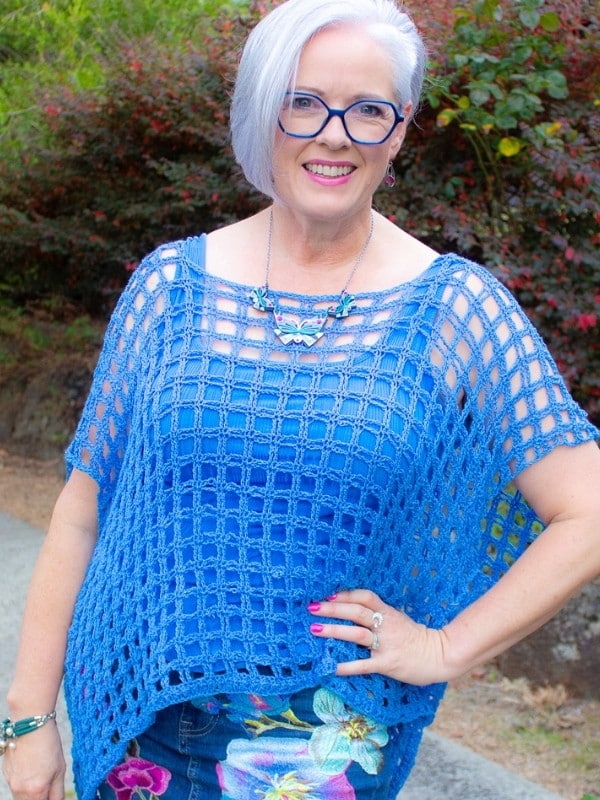
The third culprit is accessorising, or rather, the absence of it. Everyone knows Coco Chanel’s advice to “Take one thing off before leaving the house” Well, that advice has been taken to the extreme; outfits have become boring and bland. Now it’s worth thinking about what 2-3 accessories you can put on before leaving the house. A belt, the right jewellery, a bag, a scarf: these finishing touches are what take an outfit from “technically correct” to genuinely stylish. Skip them, and even a well-fitted, well-proportioned outfit can fall flat.
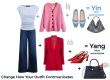
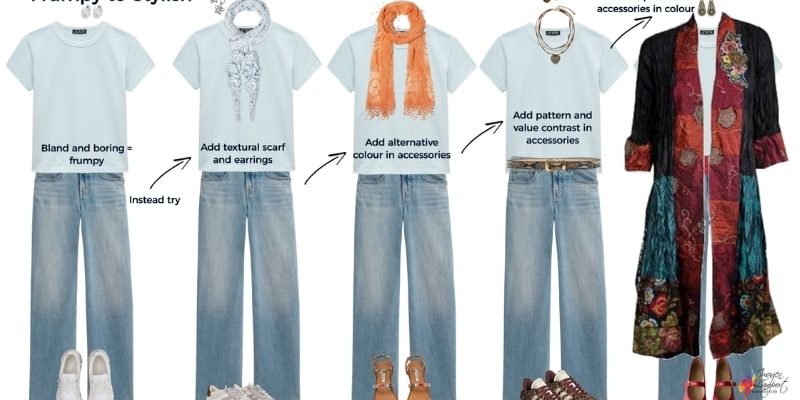
That plain tee and jeans outfit is frankly boring. It lacks a focal point, so whatever is biggest becomes the focal point (that may be your bust). Here’s a quick example of how you can add more interest using accessories (or a 3rd piece).
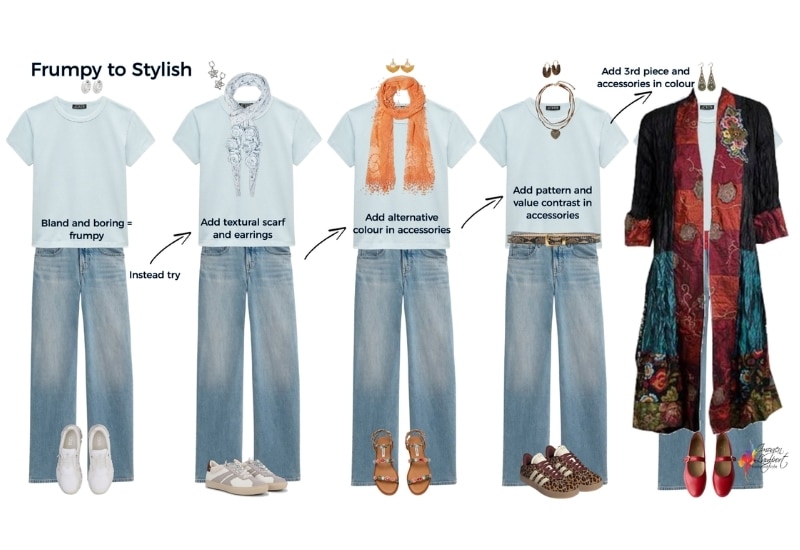
- Add textural elements – such as a textural scarf and earrings- it can be tonal for a monochromatic look.
- Add an alternate colour – a scarf, shoes, belt, earrings, or necklace
- Add in pattern – it can easily be in your accessories – from a leopard print shoe, to a snakeskin belt, to necklaces, scarves and earrings
- Add a 3rd piece – a vest, a duster, a jacket – the choice is yours, repeat colours in your accessories for a cohesive look.
4. Wear your personality, not just your shape
Here’s the one people miss most often. Even when the fit is right, and the shape is right, you can still feel frumpy if the clothes don’t feel like you.
I’m a fairly relaxed person by nature. But if I dressed head to toe in relaxed clothing every day, I’d feel frumpy, not because it’s wrong for my body, but because it isn’t fully me. Personality is one of the biggest keys to real style, because it answers the question your shape can’t. I know that I need some femininity in every outfit, a little quirk of creativity and even a little drama to make it feel like me.
Knowing your shape tells you what silhouette to buy. Knowing your personality tells you how to buy it: polka dots or florals, leopard print or stripes, tailored or fluid. Same silhouette, completely different feel, and only one version will actually feel like you when you put it on.
 Put it all together
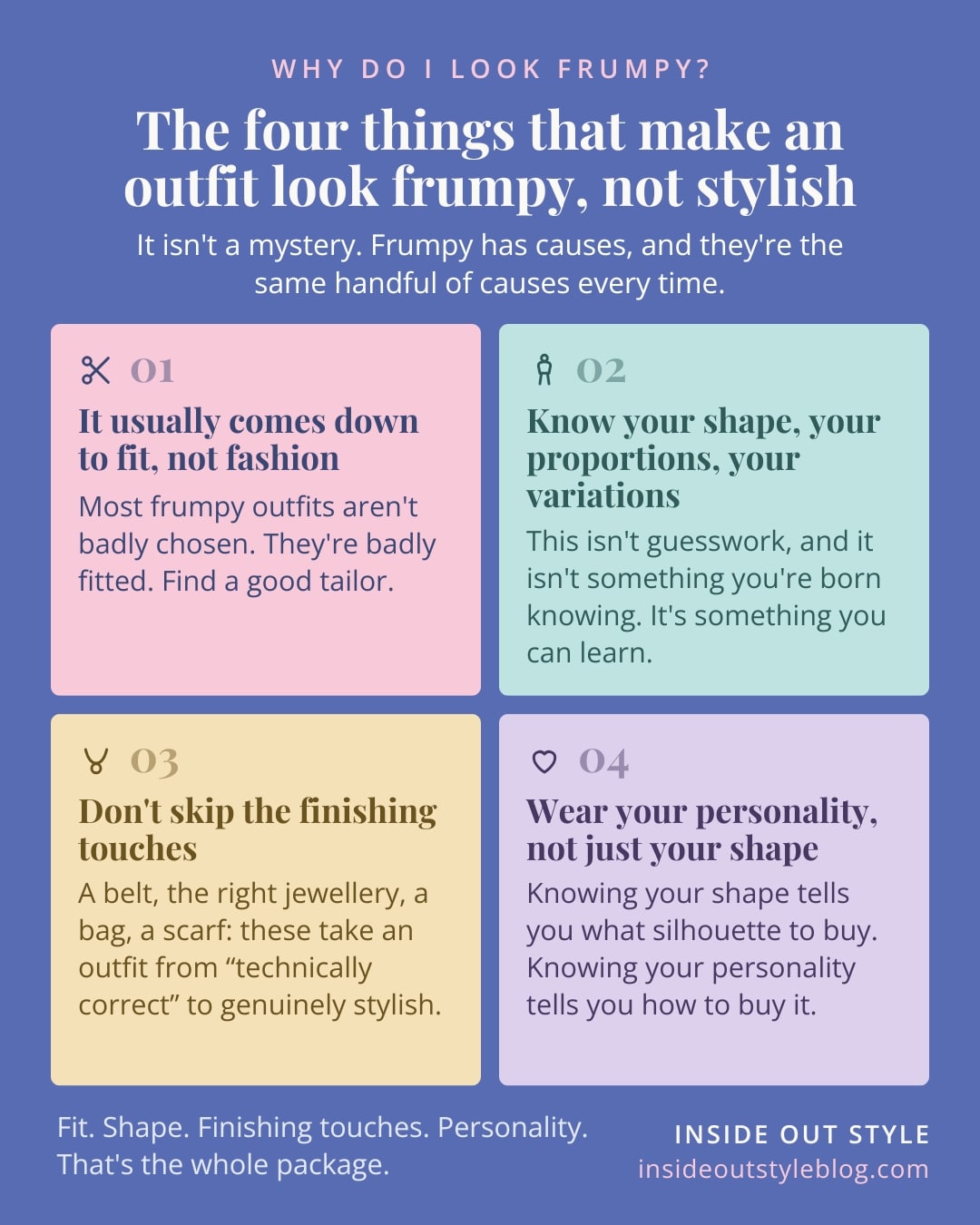
Fit. Shape. Finishing touches. Personality. That’s the whole package. And once those four are dialled in, you get something genuinely useful: a compass. Personal style guidelines that tell you what to keep, what to let go, and what’s actually worth buying next time you’re shopping, so you stop spending money on clothes that were never going to work for you.
If you want to work through all four properly, that’s exactly what I built 7 Steps to Style to do.