







If You’re a Shopaholic With “Nothing to Wear.” Here’s What’s Actually Going On.
“I’m a shopaholic, yet I feel like I have nothing to wear, and it gives me anxiety because I have too much stuff.” This was emailed to me by one of my lovely readers.
If that sentence made you wince a little in recognition, you’re not alone. It sounds like a contradiction. Too many clothes and nothing to wear, at the same time. But it’s not a contradiction at all once you understand what’s actually causing it.
The real problem isn’t shopping. It’s not knowing what you’re looking for.
We’re not taught how to dress ourselves beyond the physical aspect of putting on a T-shirt the right way round. Nobody sat us down at school and explained what suits our colouring, our proportions, or our personality. So we learn by watching everyone else instead, hoping something will finally click.

You see someone stylish and think, that’s the answer. An Instagrammer says everyone needs a particular jacket, and you buy it. It looked incredible on the sales assistant, so you assume it’ll look incredible on you too. And then you get it home, and it just doesn’t work, and you’re not entirely sure why.
I did exactly this before I learned what I know now. I’d see someone stylish, buy the thing they were wearing, and put it on expecting to feel like them. It didn’t work, for lots of reasons I couldn’t have named at the time. Now I can. Every purchase I make today, I already know it suits my colouring, works with my body and fits who I am. That’s the difference knowledge makes.
Without that knowledge, you end up with a wardrobe full of things that don’t go together, and worse, things that aren’t even *you*. They’re borrowed decisions. And borrowed decisions don’t solve the problem, no matter how many of them you make.
Why the anxiety keeps building
Here’s the bit that makes this genuinely stressful rather than just mildly annoying. Once you’ve bought something, you’re reluctant to let it go, because you’re not sure if it was actually the mistake or if you just haven’t styled it right yet. So it stays. And stays. And the wardrobe fills up with maybes.
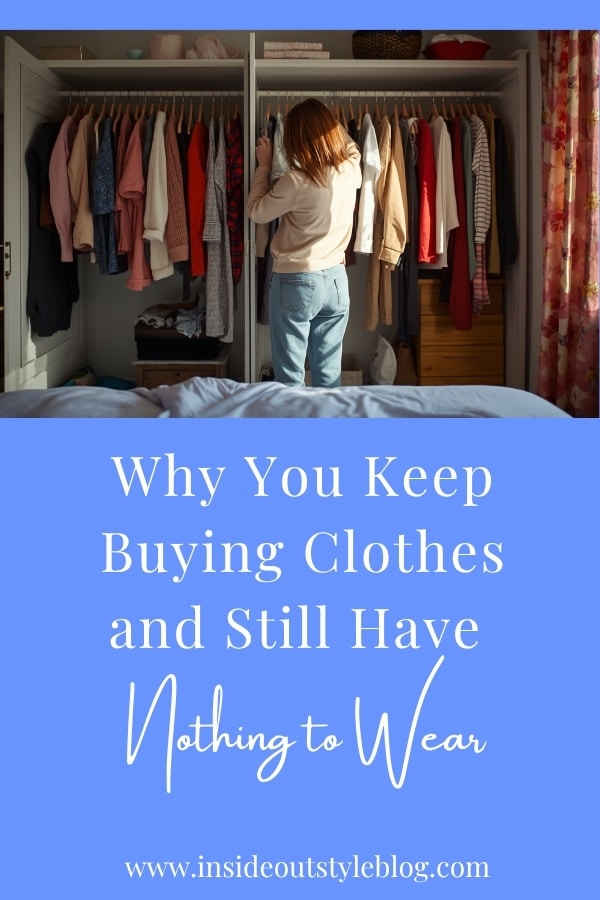
This is what creates the standing-in-front-of-the-wardrobe anxiety so many of us know well. You’ve got dozens of “possibilities” in there, and no criteria for sorting the ones that work from the ones that don’t. That’s overwhelming, and it’s exhausting in a way that compounds daily.
A research from sustainable clothing brand Thoughts found the average wardrobe holds 152 items, yet only 44% are worn regularly, and women spend around 17 minutes a day deciding what to wear.
Not getting dressed.
Just standing there, deciding.
Over a working life, that adds up to months spent in front of a wardrobe that’s supposedly full of options
And it’s not cheap either. UK research from sustainable clothing brand Thought found shoppers spend an average of £36,168 (roughly $100,000) over a lifetime on clothing they didn’t need, much of it barely worn. That’s not a wardrobe problem. That’s a decade of holidays, or a house deposit, quietly hanging unworn in a cupboard.
What actually fixes it (and it isn’t a bigger wardrobe)
The fix isn’t buying less through sheer willpower, though that helps. It’s knowing what you’re looking for before you walk into a shop, so you stop buying things that were never going to work in the first place.
That means knowing four things about yourself:
- Your colours. Not a season label, but the actual undertone, intensity, value and contrast that make you look vibrant rather than washed out. It’s not just the colours you need to know, but also how to wear them for you – the unique individual.
- Your silhouette, scale and proportions. What genuinely suits the shape and scale you’re working with.
- Your personality. Comfortable or polished, quirky or classic, bold or understated. There’s no wrong answer, but there is a wrong answer for *you* if you buy against it.
- Your personal style criteria, built from the three above, so every purchase gets measured against something real instead of vibes.
Once you have that, culling your wardrobe stops being agonising. You’re not guessing whether something might still work someday. You know, because you’re checking it against criteria that are actually yours.
Give your dopamine hit somewhere else to go
Shopping feels good because finishing anything feels good, and a purchase reads to your brain as a completed task. That’s not a character flaw; it’s just how dopamine works. The trick is giving yourself other ways to get that same hit.
Try a shopping pause. Not a full year; that’s the fashion equivalent of a crash diet and about as sustainable for 99% of people (plus clothes do wear out and need replacing over time). Start with one month. Instead of buying, go and build three outfits from what you already own. Or go through your wardrobe and let go of anything that doesn’t work on your body anymore (holding onto clothes that you never wear because one day they might work is not the solution). Both give you the same sense of completion shopping does, minus the £36,000.
Experiment with creating different outfits with the same garments, just a few changes here and there can make you see just how many outfit options you already have in your wardrobe (and that you probably don’t need more clothes if your wardrobe is already full).
Here’s an example from my own wardrobe.
Take a green blazer, pair it with jeans (but different colours and styles). Then change up accessories and shoes.

First look – darker navy jeans with cobalt top and peacock necklace.
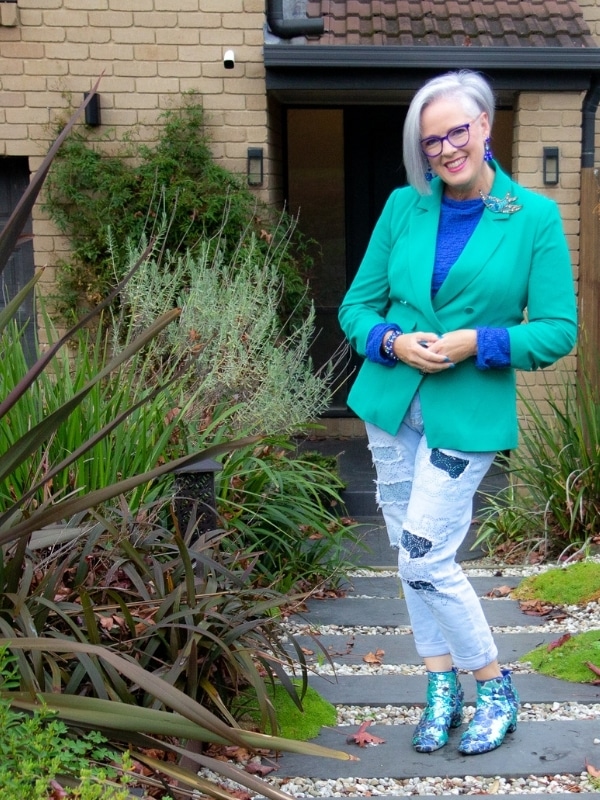 Second look, same blazer and top with sashiko jeans, sequin boots and bird brooch.

Third look, same emerald blazer but with a cobalt tee, cobalt ballet flats and a statement flower necklace.
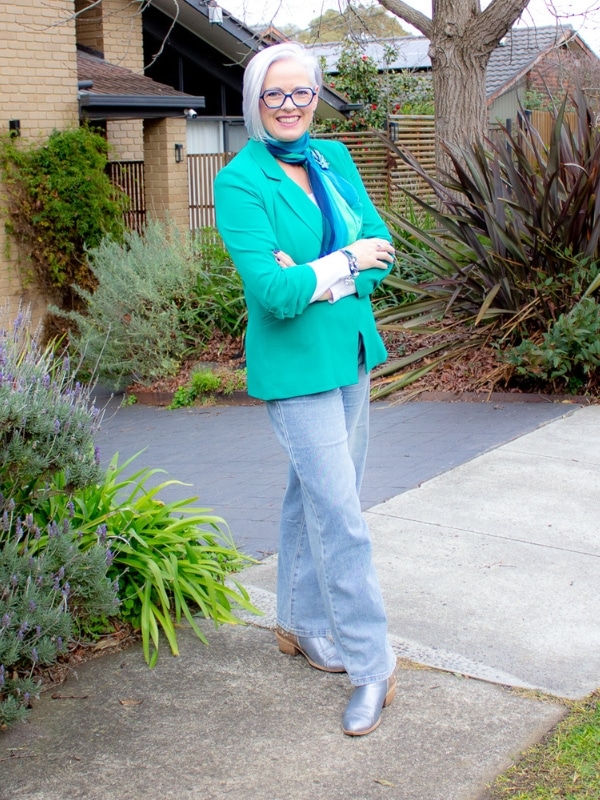
Fourth look – again with jeans but this time lighter blue and straight-leg, and with a blue and green floral scarf and silver boots.
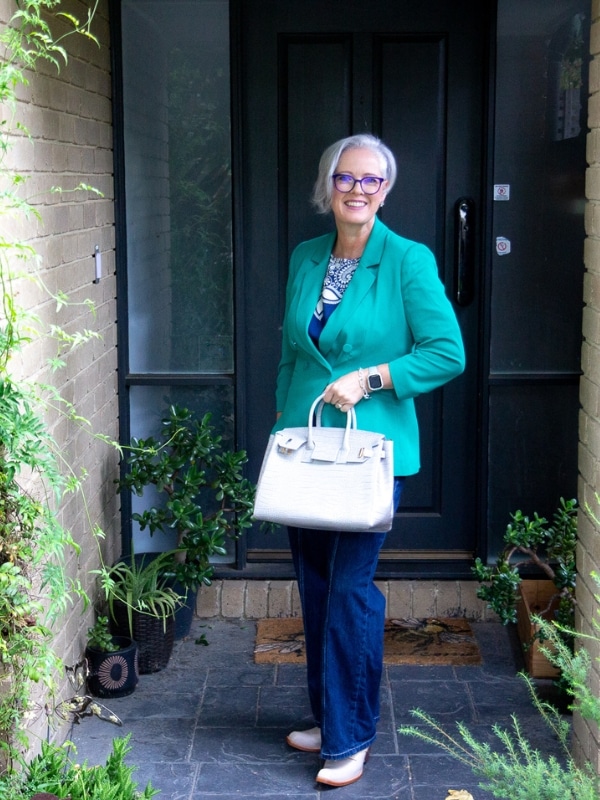
Final look – with dark wide-leg jeans, navy top with a white pattern and bone Oxford shoes.
Each time you do this in your own wardrobe, you’ll get that dopamine hit that your brain craves.
Where to start
You don’t need to overhaul everything this weekend. Start by working out your colours and your silhouette, because everything else builds from there. And if doing it alone feels like a lot, that’s genuinely what I’m here for. You don’t have to work it out by trial and error the way I did.
If you want the whole thing mapped out for you rather than piecing it together from a blog post at a time, that’s exactly what focus 7 Steps to Style walks you through. Colour, body shape, contrast, your style values and how to actually build and shop a wardrobe that works, all in one place, at your own pace, so you’re not left guessing halfway through. It’s the shortcut to everything above, minus the 40 pairs of white jeans I tried on to learn it the hard way.
Discover The Average Lifespan of Clothes and What You Keep Longest Even Though You Don’t Wear It