









A delightful reader wrote to me with this query: “I can’t believe that it’s now been about 10 years since I started reading the blog and taking all of the programs and masterclasses, and I would still say that it’s some of the best money I’ve ever spent!
“I turned 60 in March, and maybe it just goes with that age, but I have a question I’ve never seen addressed and wonder if it might make a blog post – for someone like me, whose colors are Refined and whose style is “bright by design” – casual, bright, playful – what on earth would I wear to a funeral? I don’t have dark or serious clothes, and I really wouldn’t want to buy something just for that…but it’s getting to the point where I know my parents, older relatives, mentors, etc. could pass away, and I’d need to attend their service and dress appropriately. Do you have advice?”
What Do You Wear to a Funeral When Your Wardrobe Is All Sunshine?
Or: honouring someone’s life without abandoning your own.
What a wonderful question this is. And what a thoughtful one too, because only someone who has genuinely done the work of understanding their colours and their style would think to ask it.
Here’s the thing: if your wardrobe is built around who you actually are (cool, light, bright, and utterly unapologetic about it), the prospect of a funeral can feel like someone has suddenly asked you to play a completely different character. You open the wardrobe, see your beautiful, sunlit clothes, and think, “Well. I am entirely unprepared for grief.”

You’re not. Let’s work through this together.
First, a quick word on what funerals are actually asking of you
The goal of funeral attire has never really been “look miserable.” It’s quieter than that. The goal is to show respect, keep attention on the person being honoured, and feel comfortable enough to be fully present for the family. That’s it. Your clothes are simply one way to support that tone.
Modern funeral etiquette has shifted considerably. Cremation is increasingly common, which has contributed to more memorial gatherings that occur later, when families can travel and plan, and that variety means you may see a wider range of respectful outfits than you would have twenty years ago. Some families now request bright colours, or “no black,” or “wear something Mum would have loved.” One funeral of a close friend, everyone knew she loved green, so many people turned up in green to honour her. So the rules are genuinely more flexible than they used to be.
That said, unless you’ve been specifically told otherwise, the baseline is still “subdued.” And here’s the good news: subdued does not mean “wearing a colour that makes you look like a sad grey cloud.” It means restrained. And restraint, as it happens, is very achievable even from the sunniest of wardrobes.
Your “dark” is probably not what you think it is
Here’s the first thing I want you to notice: navy, charcoal, deep brown, and muted earth tones are now all considered appropriate, especially for daytime services, warm climates, or less formal gatherings.
For someone who is an Absolute Colour System Refined palette, which is Cool, Light, and Bright, your version of “dark” will never be the heavy, dense brown of an Autumn or the inky black of a Winter. And that’s fine. You don’t need to go there. What you need is your most restrained version of the colours that work for you.
Your version of dark, when you have a light palette, is between medium and medium dark (it will appear darker on you), so you don’t have to wear any of the heavily shaded neutrals. Anything that recedes is good, as it’s about not being the centre of attention.
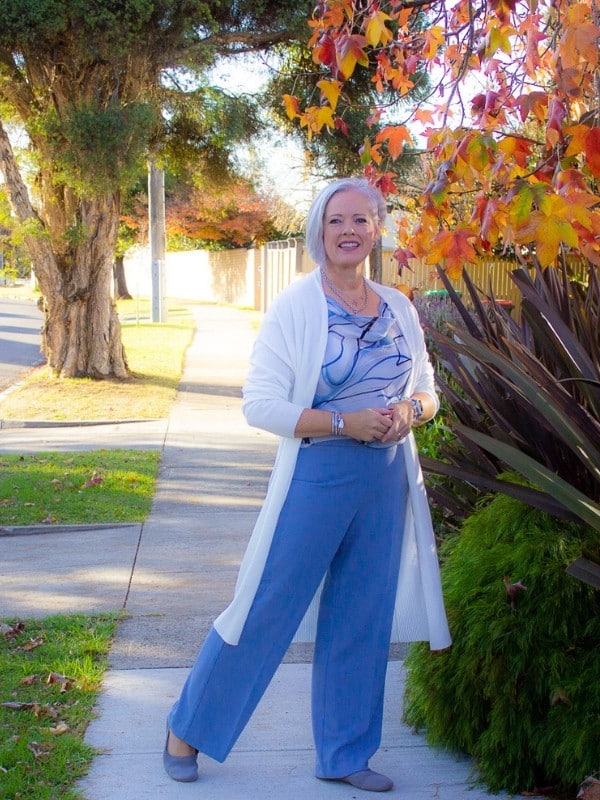 Think about it this way: if your palette normally goes from light grey to vivid aqua, the lighter grey is your funeral end of that spectrum. If you love clear, cool-toned rose, then a dusty, quieter rose with low contrast styling is your answer, not the electric fuchsia.
The question to ask yourself is not “how dark can I go?” It’s “how quiet can I go, while staying in my lane?”
Neutrals: your unexpected funeral wardrobe
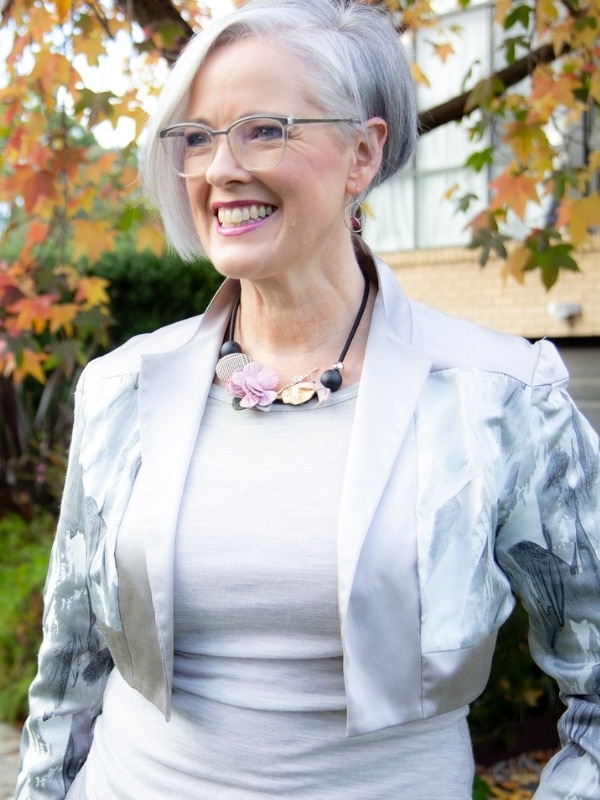 If you’ve been building your wardrobe primarily in colour, this is the moment your neutrals earn their keep. Cool, light neutrals absolutely exist in your palette, and they work beautifully for this purpose.
Mushroom, soft white, cool greige, pale dove grey, and light taupe are all still you. They’re calm, they’re quiet, they don’t shout. Paired with simple styling and minimal accessories, they read as respectful without requiring you to own a single black item.
White can symbolise purity, humility, and a simple atmosphere where grief is held in plain, honest quiet. In fact, white is the traditional mourning colour across many Asian cultures, so it’s not remotely unusual in a global context. You’re in good company.
A light, cool neutral outfit with restrained accessories and clean lines will land exactly right.
Restraint is the style, not just the colour
This is the piece that gets overlooked. It’s not only about colour. It’s about simplicity. The funeral is not the occasion for your most playful, look-at-me pieces, even if they’re technically in a subdued colour.
For this context, simplicity of silhouette does the heavy lifting. Clean lines, minimal pattern (or none), understated accessories, nothing that makes noise when you move. Deep jewel tones and muted earth tones tend to read calmer than brights, and keeping the base outfit neutral or dark with small, low-contrast details rather than loud prints helps enormously.
So if you have a favourite clear blue blouse that you normally wear with your brightest white trousers and a statement necklace? That same blouse with soft grey trousers, a simple cardigan, small stud earrings, and nothing else reads completely differently. Same colour, different energy.
That’s the lever you’re pulling: simplicity and restraint, not colour abandonment.
Building a small “quiet occasion” capsule
You don’t need a funeral wardrobe. That sounds grim and also wasteful. But you probably do want two or three items that are more on the subdued end of your spectrum, and that double up for other occasions where a quieter look is appropriate: hospital visits, serious work meetings, certain kinds of memorial services.
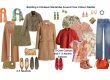
Here’s what to look for (all in your cool, light palette):
A simple, well-cut pair of trousers or skirt in dove grey, soft taupe, or cool greige. A blouse or top with a clean silhouette, no ruffles or playful prints, in one of your quieter shades: soft white, muted mauve, pale aqua that leans grey. A light cardigan or blazer in a neutral that layers over almost anything. One pair of closed-toe shoes in a neutral.
Four pieces. They’ll serve you for years, they work in your colours, and they can be mixed with things you already own to stretch even further. The investment is small, the usefulness is not.
A note on pattern
Bright by Design usually means you love a great print. Completely understandable. For a funeral, you’ll want to set those aside in favour of solids, or at most a very small, very quiet pattern with low contrast between the colours. Think: a barely-there pin dot in tones that barely differ from each other, not a bold floral. The test is whether the pattern draws the eye. If it does, it’s not the day for it.
The practical bottom line
The practical centre of modern funeral etiquette is still the same: quiet respect. Your colours don’t have to disappear. They just need to rest for a few hours.
You are a light, cool, bright person. Your version of quiet is still beautiful. A soft dove grey outfit with simple pearl studs, or a cool white linen dress with a grey cardigan and flat shoes, is genuinely elegant and appropriate. Nobody in that room is going to be troubled by it.
Psychologically, darker clothing creates a kind of container for collective grief, a visual signal of solidarity with the bereaved. You can honour that with your quieter neutrals and your most restrained colour choices, even if they’re lighter than what anyone else in the room is wearing. What matters most, always, is that you showed up.
Have a question about navigating your style in a situation where you feel stuck? I love the real-life questions, because that’s where all the interesting things live.
Discover Your Palette of Colours
You too may realise that black is not your best neutral. If you’d love to discover your best colours, you can get an online colour analysis here – done by me, a human with over 20 years of experience to give you the nuanced and accurate result you desire.






Thanks again for a great post.
I’m getting to that time of life where there is an increased frequency to have respectful capsule (light, warm & smokey). I have already knitted two lovely lace capes in greys. One warm thick yarn & one in cotton. They are not particularly warm greys. I love your idea of having four pieces in your light quieter neutrals & colours. Once these pieces are in my wardrobe they can be worn whenever & with whatever I want. Mix & match on a daily basis but also available for those quieter respectful events.
Love this post, Imogen! For those somber/sombre occasions, cut is also key. I have a businesslike 3/4 sleeve wrap dress in grey with ivory polka dots that has been to many a funeral and to court. It’s professional and subdued and I can add color as needed with jewelry. A black and white tweed suit (that reads grey) is my choice for cooler weather; I wore it with a red print blouse for my mother’s funeral (with red shoes). Her favorite colors were red and yellow; we asked everyone attending to wear a splash of color because it would have made her happy. I’m so thankful most did! It brightened a difficult day and honored her in a special way.
Hi – para 4 last line I think you put wedding rather than funeral. You may want to correct. Thanks for an interesting article btw.
Thanks for picking up my typo Fleur (that friend never even had a wedding – not sure what I was thinking).