



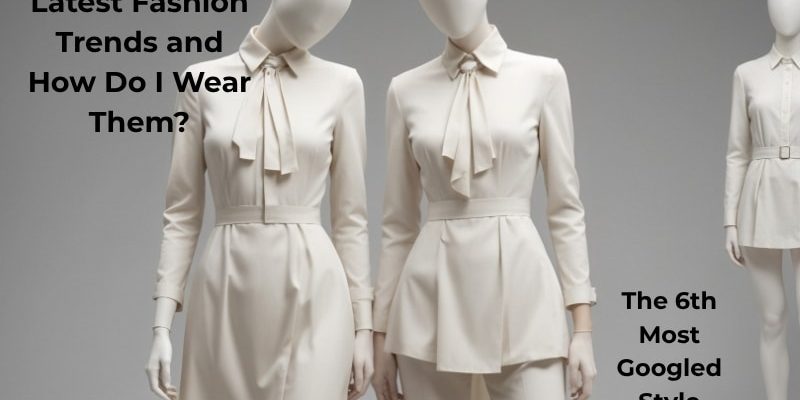




Following on in our deep dive into the most commonly Googled style questions is “What are the latest fashion trends and how do I wear them?”
It’s an interesting question: as fashion trends change, the older we get, the less aware we often are of them. Yet how we are perceived can be influenced by our clothing choices, and fashion trends are a part of these judgements, as what we wear is communicating (which I discussed here).
 The Hamster Wheel You Didn’t Choose to Get On
Somewhere in the mid-2010s, the fashion cycle broke. What had previously been a twice-yearly rhythm, spring/summer and autumn/winter, accelerated into something barely recognisable as a cycle at all. Fast fashion brands began releasing new collections weekly. Social media compressed the lifespan of a trend from seasons to weeks. And the concept of “microtrends,” born on TikTok and amplified by the algorithm, began producing style moments so brief that by the time most women had found the item in their size, the trend had already been declared over.
The result is a fashion landscape that is, by design, impossible to keep up with. And a quiet but pervasive anxiety among women who feel perpetually behind, perpetually wrong, perpetually in need of something new.
This is not an accident. It is a business model.

The Economics of Making You Feel Behind
The fashion industry is, at its core, a desire-manufacturing machine. Its commercial survival depends on one thing above all others: your belief that what you currently own is insufficient. That something is missing. That the right purchase, the right trend, the right seasonal update will finally produce the feeling of having arrived, of being put-together, of being enough. This is why the women’s apparel market is currently worth over $1.05 trillion per year! It’s no accident that brands are constantly pushing new clothes, trends and weekly releases of new styles. That’s how they make money.
Thorstein Veblen identified the social mechanics of this more than a century ago, in his 1899 analysis of conspicuous consumption, arguing that the display of fashionable goods serves primarily as a signal of social status and group membership. Georg Simmel, writing at the same time, described fashion as a system built on the tension between the desire to belong and the desire to distinguish oneself, a tension that requires perpetual movement to sustain. As soon as a style becomes universal, it loses its status-signalling function, and the cycle must begin again.
What neither Veblen nor Simmel could have anticipated was the degree to which digital technology would accelerate and intensify this cycle. Social media has not just sped up the trend machine. It has democratised access to it, globalised its reach, and weaponised social comparison in ways that make the psychological pressure to participate feel almost inescapable.
Research by Festinger on social comparison theory, developed in the 1950s and extended substantially in the digital age, explains why scrolling through a curated feed of stylish women produces not inspiration but inadequacy. We are wired to evaluate ourselves against others, and social media provides an endless, algorithmically optimised stream of comparison points, none of whom are having a bad style day, none of whom are showing you the forty things they tried before this one. This is why social media can be so toxic.
 Y2K, 80s and 90s Vintage, and Why Nostalgia Keeps Winning
One of the more culturally interesting features of recent fashion cycles is the dominance of nostalgic aesthetics. Y2K references, seventies silhouettes, nineties minimalism, the “old money” aesthetic that is essentially a reimagining of early 1980s preppy dressing. Vintage and secondhand clothing, once a niche pursuit, has become a mainstream style strategy.
This is not coincidental, and it is not simply a matter of cyclical trend return, though that is part of it. Psychologists who study nostalgia, including Tim Wildschut and Constantine Sedikides, whose research from the mid-2000s onwards has significantly rehabilitated nostalgia as a psychological phenomenon, have found that nostalgic engagement serves important psychological functions. It strengthens social connectedness, enhances self-continuity, and provides a buffer against anxiety and existential threat.
In other words, when the present feels unstable or overwhelming, we reach for the past. And the present, for the past decade or so, has felt considerably unstable. Why the 90s and early noughties? That was a period before social media existed.
The popularity of vintage and nostalgic aesthetics also reflects something more straightforward: quality. Garments made in earlier decades were, in many categories, made better. The rise of vintage as a genuine style strategy, rather than simply a sustainability gesture or an aesthetic choice, reflects women’s growing recognition that older clothes often fit better, last longer, and feel more distinctive than their contemporary equivalents.
What is worth noticing, as a consumer rather than a passive participant in the trend cycle, is that the fashion industry has rapidly co-opted the vintage aesthetic, producing “vintage-inspired” fast fashion pieces at scale, which rather defeats the point. The impulse toward nostalgia is genuine. The industry’s response to it is not.
The Difference Between Being Stylish and Being Fashionable
This is a distinction that matters enormously, and that the fashion industry has a vested interest in obscuring. In fact, they will constantly tout that being fashionable = being stylish, when in fact they are not the same.
Being fashionable means being current. It means wearing what is trending now, participating in the aesthetic conversation of the moment, and updating your wardrobe at a pace that keeps you visibly aligned with the present fashion cycle. It is, by definition, temporary. What is fashionable today will not be fashionable in two years, possibly not in six months.
Being stylish is something else entirely. It means having developed a coherent, authentic visual language that expresses who you are, that works for your body and your life, and that communicates something consistent and compelling about you regardless of what is currently on the runway. Stylish women wear trends selectively when a trend aligns with their existing aesthetic. They do not reorganise their wardrobes around every new season.
The women consistently cited as style icons, across decades and cultures, are almost universally women of strong personal style rather than dedicated followers of fashion. Their power comes not from currency but from consistency. From a clarity of self-expression that is recognisable and distinctive. From having done the deeper work of understanding who they are and developing a visual language that communicates that identity with confidence.
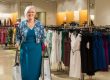
Lisa is one of the most stylish women I know through my 7 Steps to Style program, who owns and continues to wear clothes that she’s had for over 30 years. She mixes all eras, old with new and creates her own stylish outfits that are creative and outside of fashion trends. She’s not trying to “fit in”; she’s being authentically herself, and her style is admired by many.
Fashionable is a status you can buy. Stylish is a quality you have to develop. And it lasts considerably longer.
The Filter Framework: Evaluating Any Trend Against Yourself
This does not mean trends are irrelevant or that paying attention to fashion is somehow intellectually beneath you. Trends are interesting. They reflect cultural mood, they introduce new silhouettes and colour stories that can genuinely enrich an existing wardrobe, and occasionally a trend comes along that aligns so perfectly with your existing aesthetic that adopting it feels effortless rather than effortful.
The question is not whether to engage with trends. The question is how to engage with them intelligently, from a position of self-knowledge rather than trend-induced anxiety.
I use what I think of as a filter framework with clients, a set of four questions to ask about any trend before deciding whether it belongs in your wardrobe.
Does it align with my personality? Every trend has an underlying personality, an aesthetic energy that suits some psychological types and not others. The quiet luxury trend, with its emphasis on restraint, understatement, and quality signals, aligns naturally with certain introverted, refined personalities and sits awkwardly with expressive, warm, high-energy ones. Before adopting any trend, identify the personality it is expressing and ask honestly whether that personality is yours.
Does it harmonise with my body? Not in the body-shaming sense of “is this flattering?” but in the more precise sense of “do the specific proportions, silhouettes, and details of this trend work with my specific proportions?” The wide-leg trouser trend, for instance, works beautifully on certain leg lengths and proportions and creates visual challenges for others. That is not a reason to dismiss it categorically, but it is a reason to try it thoughtfully rather than adopting it wholesale.
Does it serve my lifestyle? A trend that has no place in your actual daily life is not a trend for you, regardless of how compelling it looks on someone else. If you work from home, the resurgence of sharp tailoring is interesting but largely irrelevant to your daily dressing. If you live an active, outdoors-oriented life, the ballet flat trend requires some creative problem-solving. Trends that cannot be lived in are trends that will hang in your wardrobe unworn, gradually generating guilt and waste.
Does it have longevity in my wardrobe? Some trends are genuinely short-lived microtrends, a specific print, a particular shoe shape, a styling detail that will read as “of this moment” in eighteen months. Others are longer-cycle trends that reflect a more durable aesthetic shift and will have meaningful wardrobe longevity. Before investing in a trend, it is worth asking which category it falls into and calibrating your spend accordingly. Adding some current trend items to your wardrobe stops you from looking and feeling stale. But there is no reason to throw everything out each season and start again. Not only is that wasteful, but it’s also terrible for the environment.
How a Strong Personal Style Makes You Trend-Proof
The paradox at the heart of all of this is that the women who are most stylish are almost never the women who follow trends most closely. They are the women who have done the deeper work of developing a genuine personal style and who engage with trends from that secure foundation rather than from the anxious position of feeling perpetually behind. One of my other favourite 7 Steps to Style program members is Sue – who shares about her style here.
When you know who you are and have developed a visual language that consistently expresses that identity, trends become interesting rather than threatening. You can look at what is happening on the runway or on social media with genuine curiosity, evaluate it against your existing aesthetic, adopt what serves you, and discard the rest without guilt or anxiety.
This is what trend-proof actually means. Not ignoring trends. Not being oblivious to fashion. But having a strong enough sense of your own style that you are making active choices about what enters your wardrobe, rather than being swept along by a current that was designed by a commercial machine to keep you spending. The more creative and personal your style, the less trends will affect your style.
Research into consumer decision-making consistently finds that clarity of preference, knowing what you want and why, produces more satisfying purchasing decisions and fewer instances of buyer’s remorse. The women who feel best about their wardrobes are not the women who spend the most or follow trends the most faithfully. They are the women who buy the least and choose the most deliberately.
That deliberateness is not a personality trait. It is a skill. And like all skills, it is learnable.
Trends Are a Tool. You Don’t Have to Use Every One.
The fashion industry will always have another trend waiting. Another aesthetic to make you feel behind, another piece that promises to be the missing element, another season that declares everything you currently own to be last year.
You do not have to participate in this on its terms.
Trends are a tool. A lens through which to view new possibilities, test new ideas, and occasionally find something that genuinely enriches your existing wardrobe. They become a problem only when they replace self-knowledge as the basis for your style decisions.
Know yourself first. Then look at the trends. In that order. Always.
Want to understand your personality and how to express that through your style? This is something we dive deep into in 7 Steps to Style, which is a small investment in making sure that you only buy what actually works for you, and is one that you will reap rewards from for the rest of your life. Find out more here.



OMG, this article is so timely. I’ve been seduced by the puffy sleeve trend which I hope will end soon. Doesn’t suit me one bit and it took me purchasing a dress and three puffy sleeved tops to realise!
This is the best article ever and, for me, it comes with perfect timing. Over recent times I have succumbed to watching trends, something I’ve never done and it put me in the muddled thinking stage. More ridiculously, I’m in my mid 70’s so that seems just cruel. Social media has been the culprit and I fully admit to falling down that rabbit hole. Thank you Imogen for rescuing me, it was the wakeup call I needed.