






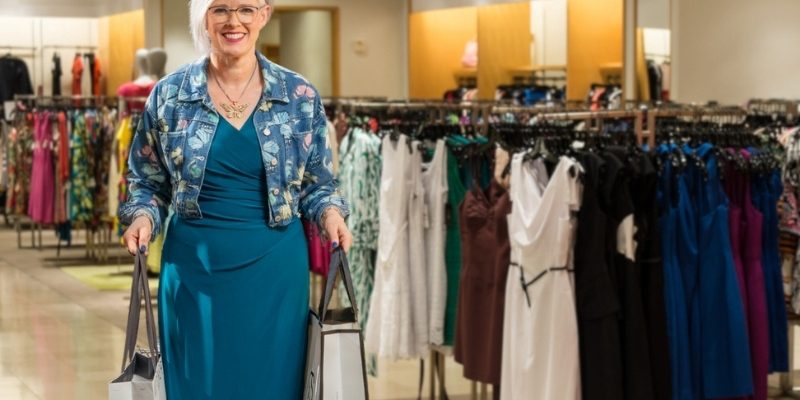




It Was Never the Purchase in the Bag. It Was the Choosing.
Here’s a small mystery worth sitting with.
You’ve had a rotten day, you’re feeling down. You go shopping, and you feel better. We all know this happens, and most of us are faintly embarrassed by it, because the obvious explanation is a bit shameful: I cheered myself up by buying stuff, like a toddler handed a biscuit to stop the crying.
But that explanation turns out to be wrong, and the real one is far more flattering to you. The thing that lifted your mood was not the acquiring. It was the deciding. And once you understand that, you get access to the good part without needing the carrier bag at all.
What sadness actually is
Start with a question psychologists have a surprisingly precise answer to: what makes sadness feel the way it does?

The research points to one particular ingredient. Sadness, more than almost any other emotion, comes wrapped in a feeling that things are out of your hands. That life is being decided somewhere above your pay grade, by circumstances and chance and other people, and you’re just the one it’s happening to. Psychologists call it a reduced sense of personal control, which is a very tidy phrase for a very heavy feeling. When we’re sad, we don’t just feel low. We feel powerless.
Hold onto that, because it’s the key that unlocks the whole thing.
The study that explains the biscuit
In 2014, three researchers at the University of Michigan, Scott Rick, Beatriz Pereira and Katherine Burson, published a paper in the Journal of Consumer Psychology with a title that doesn’t mess about: The Benefits of Retail Therapy: Making Purchase Decisions Reduces Residual Sadness.
Their idea was elegant. If sadness is fundamentally a feeling of no control, then anything that hands you back a sense of control should take the edge off it. And shopping, whatever else it is, is a rapid little machine for making choices. This one or that one. The blue or the green. Yes or no. Every rail is a series of small decisions that are entirely, unarguably yours to make.
So they tested it. Across three experiments, they made people a bit sad, then let some of them make shopping choices, and measured what happened to the sadness. It came down. Reliably. And in every experiment, the thing doing the work was exactly what they’d predicted: a restored sense of personal control. The choosing gave people back the feeling that they were steering something, and that feeling is the antidote to sad.
The two details that prove it’s real
Anyone can find that shopping cheers people up. What makes this study clever is two findings that show why, because they’re the sort of thing you’d only see if control really is the active ingredient.
First, it didn’t work on anger. When they made people angry rather than sad, the shopping choices did nothing. And that makes perfect sense on their theory, because anger isn’t a control problem. Anger comes with a sense that some specific person did this to you, that there’s someone to blame. Handing you a rail of jumpers to choose from doesn’t address that at all. Sadness is about lost control, so control fixes it. Anger isn’t, so it doesn’t. A mood cure that’s fussy about which mood it cures is a mood cure that’s telling the truth about how it works.
Second, and this is the one I’d frame and hang on the wall, choosing not to buy worked just as well as buying. Passive non-choices did nothing, but actively deciding, including actively deciding to walk away, delivered the benefit. It was never about the transaction. A decision is a decision, and your sadness can’t tell whether your card came out.
What is great is that when you have the style education to make those great decisions, you become discerning; you know when it’s the right thing to walk away, so you don’t end up with a feeling of guilt from having made a bad decision (which can be the downside of shopping). This is why I’m so passionate about teaching women all about how to author their personal style, because it’s in the education you get to decide what is right and wrong for you and you’re not at the mercy of sales assistants, Instagram influencers, or just the cheeky tricks retailers do to make you buy.
But you don’t have to go shopping to get the same effect
Put those together and something quietly wonderful falls out.
If the medicine is the choosing, not the spending, then the entire benefit of retail therapy is available to you without spending a penny. The purchase in the bag was never the point. The bag was just the receipt for a feeling you could have had for free.
Think about what this means on a bad day. The old script says: feel low, go out, buy something, feel briefly better, deal with the regret and the clutter and the money later. But if it’s the deciding that heals, you can get the exact same lift from any activity that puts a run of real choices back in your hands. And you happen to own a cupboard absolutely full of them.
Let’s shop your wardrobe
Your own wardrobe is a decision-making machine every bit as good as a shop, and rather better, because every choice in it is real and consequential and yours. Consider spending some time in your wardrobe and asking yourself these questions:
- Which of these three similar garments do I actually love?
- What goes with this?
- What are all the options that I could wear this hero garment with?
- What have I been keeping that I’m now, calmly, deciding to let go?
- Shall I put these two together in a way I never have before?
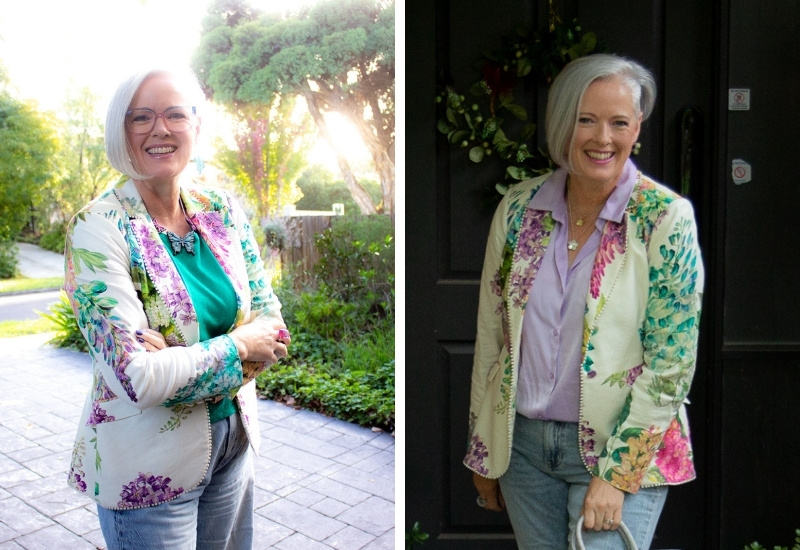 That’s not just tidying. On the evidence, that’s the same psychological mechanism that a shopping trip runs on, minus the need to spend any money at all to get that feeling. This is real wardrobe therapy, without having to spend any money.
I’ve watched this happen with clients for years without having the study to explain it. I arrive to do a wardrobe edit session, because my client is feeling flat and a bit defeated about what’s in there, and we spend a few hours making decisions about her own clothes, and she finishes visibly lighter, having bought nothing. I used to think it was the outfits. I now think a good deal of it was simply that she’d spent an hour back in charge of something, feeling like she was the one in control and making great decisions.
The catch worth knowing
This isn’t a licence to reorganise your wardrobe instead of feeling your feelings, and I’d be doing you a disservice if I pretended it were. The control fix is genuine, but it’s small, and it’s short. It takes the sharp edge off residual sadness. It does not fix grief, or depression, or a genuinely hard season of life, and if what you’re carrying is heavier than a bad afternoon, the answer is a real person to talk to, not a colour-sorted rail. The wardrobe is for the ordinary low days, not the serious ones.
But for the ordinary low days, it’s a genuinely useful thing to know. The lift you’ve been chasing round the shops was never hiding in the shops. It was in the act of choosing, and you can do that anywhere, including at home, for free, without a single thing coming through the door to be regretted later.
Which is, when you think about it, a much nicer story about you than the biscuit one. You weren’t soothing yourself with stuff. You were reaching, a little clumsily, for a sense of being back in charge. The stuff was just the nearest place you knew to find it.
Now you know a better one.
Next time you feel that familiar pull to go and buy something to lift a low mood, go to your own wardrobe first and make ten real decisions in it. Ten proper choices: keep, go, wear this with that. See how much of the feeling you were chasing turns out to be waiting there already.


Fantastic post, Imogen. You’re really on a roll!